Tyler Diedrick has spent the past several years traveling around the world, primarily via bicycle. Last year, he decided to take on a journey for something bigger than himself. Over the course of several weeks, he took his bike and traveled the route of the Potawatomi Trail of Death.
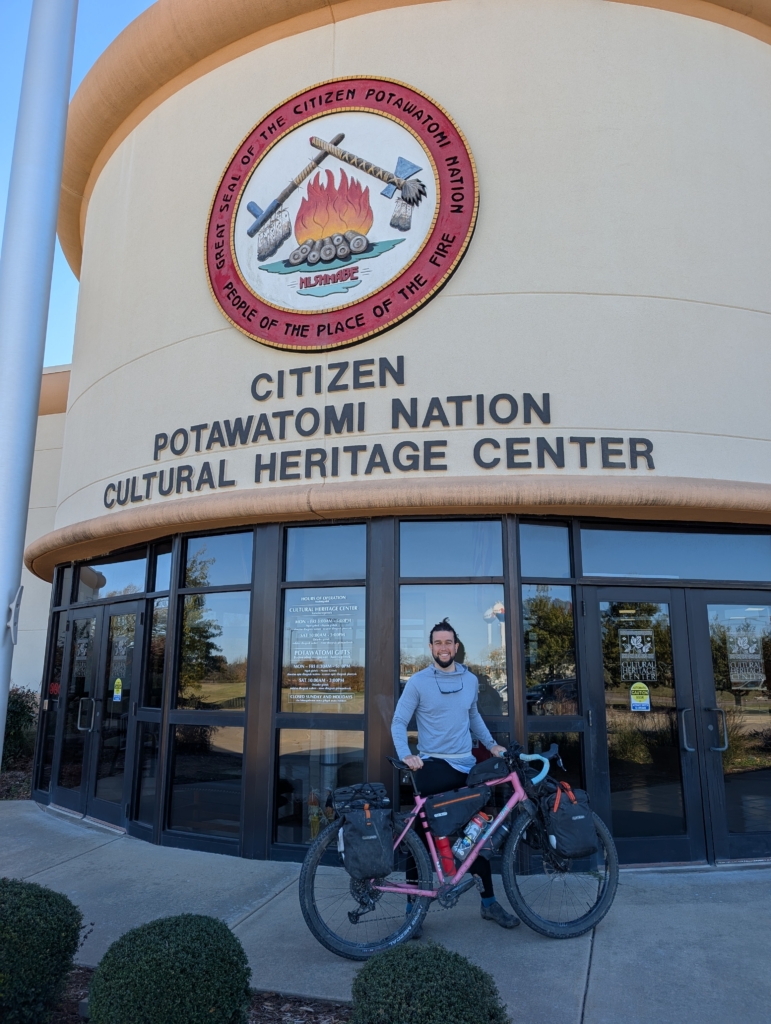
Diedrick grew up on a dairy farm in a small town near Chilton, Wisconsin, before going to school and living in Milwaukee.
“After six years of being in Milwaukee, I felt like I needed some exploration,” he said, adding that he has spent several years living in different states and traveling by bicycle as much as possible.
Most of his adventures, he said, are solo ones where he tries to push himself both physically and mentally.
“I felt like I kind of mastered that side of things, and when I was planning a tour for the end of last year, I decided I wanted to do something that was bigger than just me,” Diedrick said.
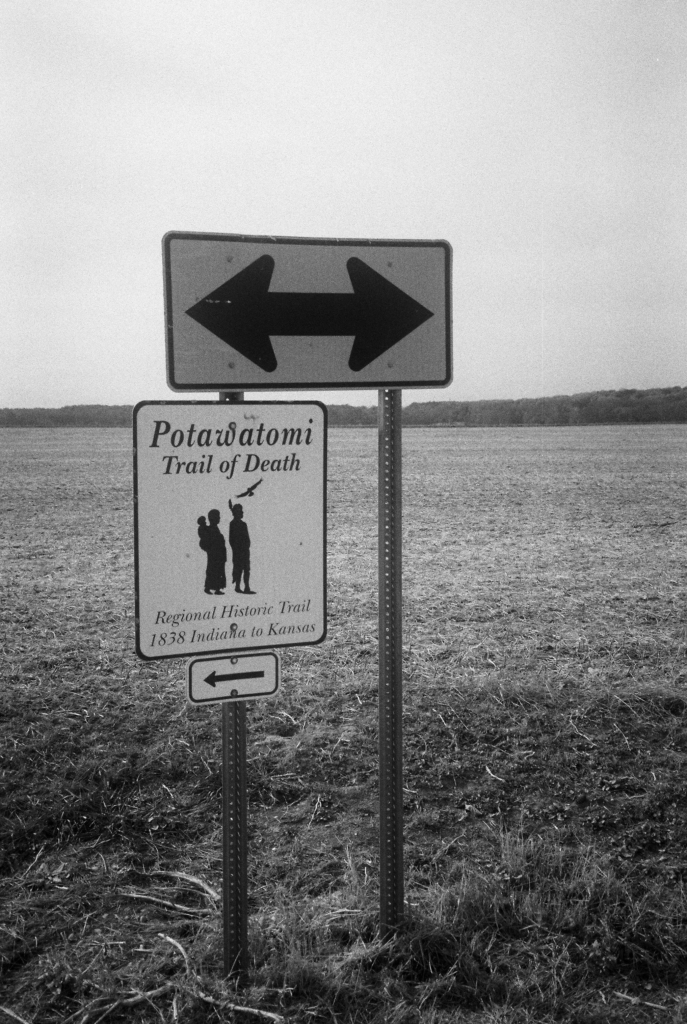
He ultimately settled on the Potawatomi Trail of Death, the forced removal of the Potawatomi people from their lands in Indiana to Kansas, a journey of more than 600 miles.
Diedrick’s distant great-grandmother was an Ojibwe woman from Manitoba named Genevieve who married his distant great-grandfather, Nicolas, an immigrant to the North American continent from France. Diedrick said he has always felt a strong connection to that part of his family history. It was this, as well as the link between the Ojibwe, Odawa, and the Potawatomi (via the Council of Three Fires) and the strong presence of Potawatomi people in Wisconsin, that drew him to the idea of biking the Trail of Death.
He said he was also motivated by a wish to raise awareness of Indigenous history in North America, dating back to an experience he had on a bus tour in Washington, D.C., years earlier.
“When we passed the National Museum of African American History and Culture, there was this huge eruption in the bus. The whole bus just cheered, and there was this major passion deeply rooted in history. I thought that was so cool,” he said. “Just a few minutes later, as we passed the National Museum of the American Indian, the bus was completely silent. There was nothing. The vibe, the energy, the feeling of passion, gone. I just felt very weird about the whole experience.”
Diedrick’s journey, which he named “Trail of Tires: A Journey of the Potawatomi,” began at his parents’ farm in northeast Wisconsin, making his way down to Twin Lakes, Indiana, near Plymouth. It was there that the Trail of Death started in 1838.
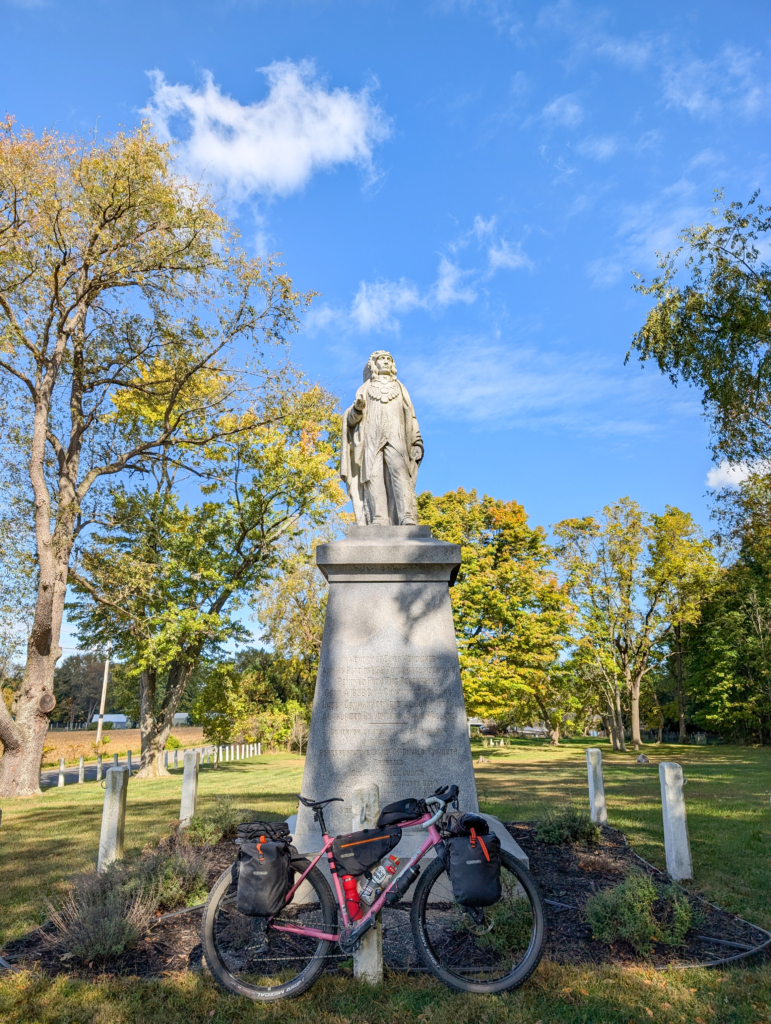
The second and main leg of the journey from Twin Lakes, Indiana, to Osawatomie, Kansas, took him 20 days to traverse by bicycle, a journey that takes around 9.5 hours by car. Once in Osawatomie, he spent another week traveling from Kansas to the current Tribal headquarters near Shawnee, Oklahoma. The three legs of the trip combined totaled nearly 1,900 miles. Shawnee, Diedrick said, was a good end point because it is where so many Potawatomi ultimately ended up.
“It felt like it kind of brought the journey full circle to end there,” he said.
Overall, he said he averaged about 50 miles per day on his bike, depending on variables such as terrain, weather conditions, etc.
“This trip was pretty flat, which is nice for cycling, but with that came a lot of headwinds,” he said.
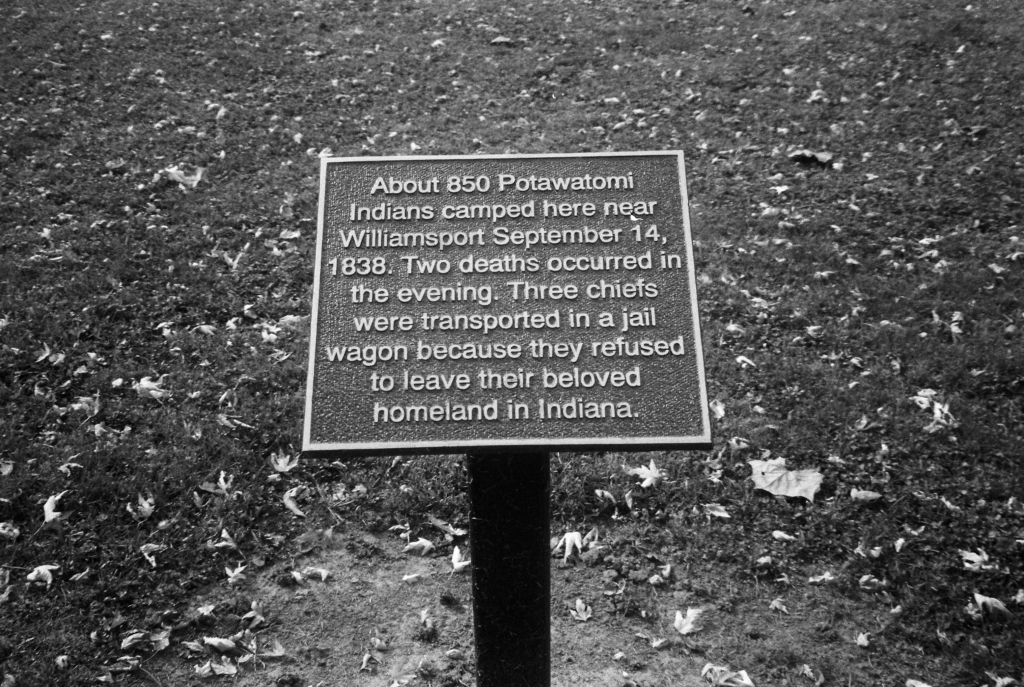
Throughout the journey, he tried to raise awareness through social media posts and word of mouth, including among people who hosted him on his journey. Some were unaware of the Tribe’s history and removal from Indiana, while others were very knowledgeable.
It was eye opening, he said, to travel past farmland in rural areas and to know that 150-200 years ago, it all looked very different — before the land was taken from Native peoples and cleared for the farms there today.
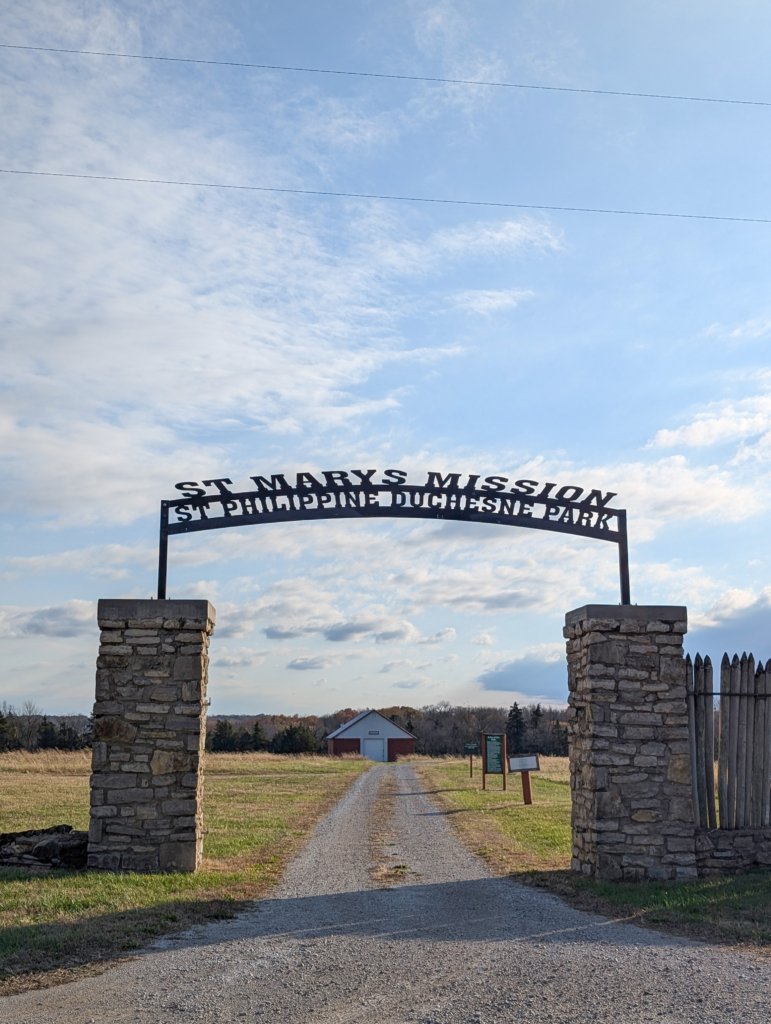
He said the little things during the journey were the most eye opening for him. For example, if the weather was bad, he could get a hotel room instead of sleeping in a tent. If he ran out of food, a grocery store was never more than a couple hours’ ride away. If he was sick of riding on rough gravel roads, he could find the nearest paved one. For the Potawatomi in 1838, bad weather, food deprivation and rough trails were more than just challenges, many times resulting in deaths. Riding through the very lands that the Potawatomi were forced to walk so long ago, during the same time of year, put things into perspective for Diedrick.
“Here I am on a bike, essentially joy riding, and it was tough for me. I can’t imagine what it was like to go through what they did,” he said. “Having that perspective and following the trail in that way, it just humbles you.”
Following his journey from Indiana to Oklahoma, Diedrick took some time off to visit his family in Wisconsin before continuing his travels in Australia, Colombia, Italy and the United States. If you would like to follow along on Diedrick’s future journeys, he is on Instagram and Facebook and posts regularly (@tylerdiedrick).