Director of Potawatomi Language Justin Neely was featured in the award-winning book “On the National Language: The Poetry of America’s Endangered Tongues.” Released in 2024 by author and photographer B.A. Van Sise, the book includes Neely and the Potawatomi language on page 130.
Van Sise gathered words and concepts from a wide range of less commonly spoken languages still living in the United States. Each language featured in the book is represented by a single word or idea along with a photograph by Van Sise.
“Van Sise’s medium for expression was photography,” Neely said. “It is his way of communicating with the world and highlighting the struggles and the endearing qualities of Native languages, showing how complex and unique they are.”
With no prior connection, Van Sise reached out to Neely directly and asked him to provide a Potawatomi word or phrase that is difficult to define. Neely chose mno bmadze, which translates to “good life” or “good health.”
“The reason that word is so hard to define is because our concept of a good life is different from the English sense of physical health,” Neely said. “You’re talking about mind, body and spirit. You’re also talking about a connection to your language, culture, ceremony, regalia and dance. Understanding the traditional Nishnabé way of life is having that good life.”
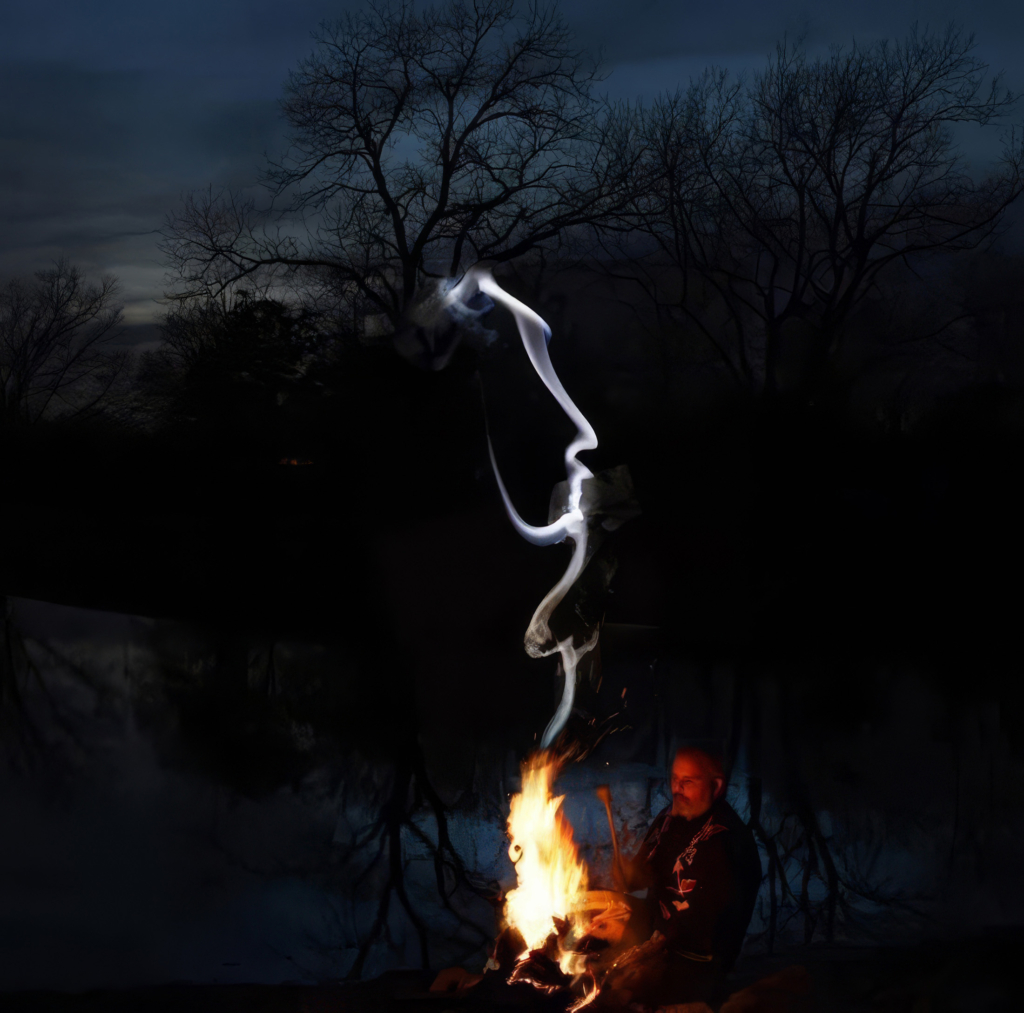
Neely built a fire and sang an honor song to help Van Sise capture the meaning of the Potawatomi phrase.
“The fire is central to who we are as Potawatomi people; we are people of the fire,” Neely said. “Fire is central to all our ceremonies, songs and doings. Song connects you across generations, and it also shows that there are elements of culture that are part of that mno bmadze. It showed that it was much more than just health. It’s so much more than that.”
Native American languages do not always translate word-for-word into English.
“We’re given this idea that America is a great melting pot where everybody comes here, gives up everything and speaks the English language,” he said. “But there are so many languages that are still spoken in the U.S.”
He shared that many people do not realize Native American languages are still living languages.
“This piece is displayed in museums across the country, and I thought that is a great way to put an image to a word, to make less spoken languages more visible and real to people,” Neely said. “I have realized that visibility is important, particularly with minority languages. That is why it is important for us to put gashnen on stop signs. It makes the language more visible and real to people.”
Neely explained the best way to connect with people to truly understand a culture is to learn its language.
“Language is kind of a window to the past,” he said. “It shows us what was important to our ancestors 1,000 years ago and what still is important to us today as traditional Potawatomi people. There are so many small details that are inside the language that change the way you see the world. You start to see the world like your ancestors.”
To learn more about the book, visit bavansise.format.com.