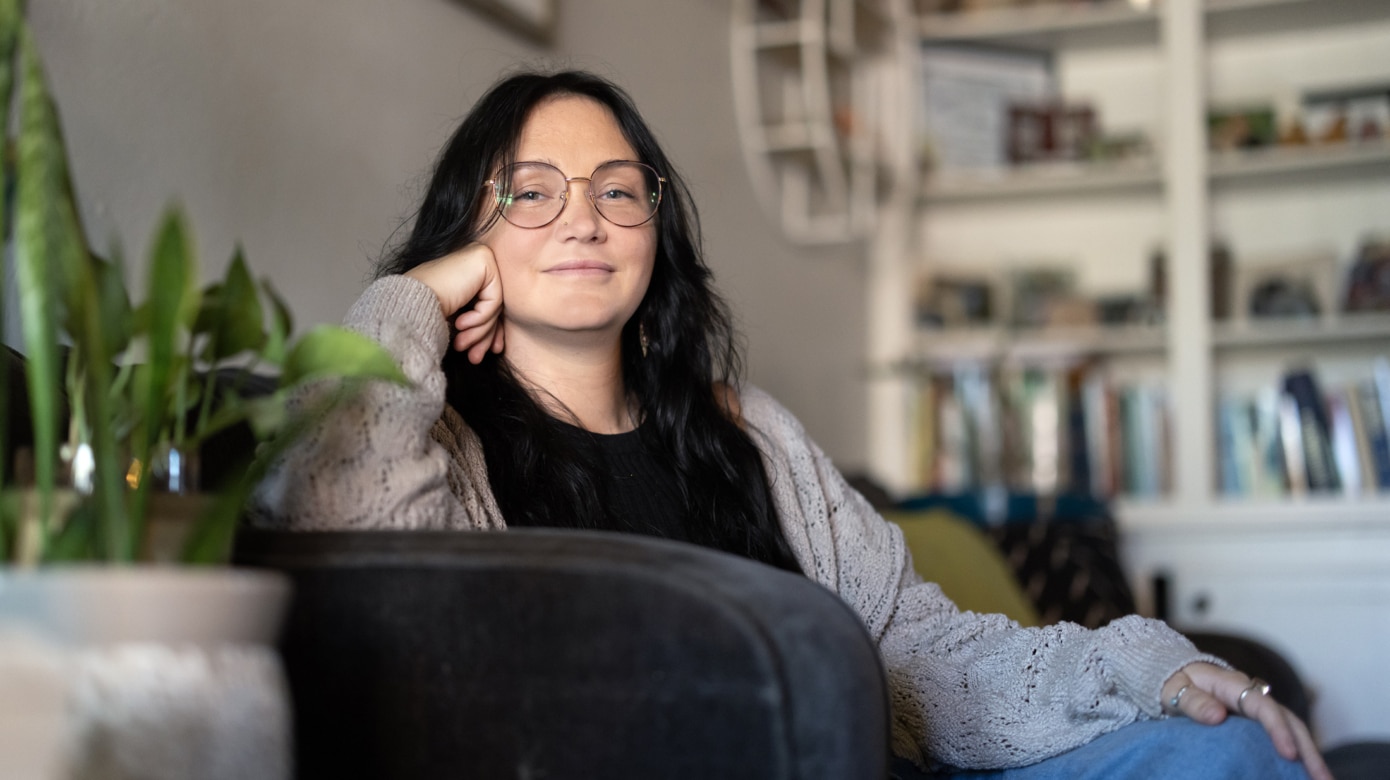
Tribal member Samantha Masquat knows firsthand how the Citizen Potawatomi Nation can help Tribal members succeed.
Growing up, she was not able to remain in the custody of her parents. At one point, Masquat was made a ward of the state child welfare court. Eventually, she was placed with her grandmother and under the supervision of CPN tribal court.
“It was obviously not a fun experience for me as a young girl,” Masquat said. “When (the case) was moved to CPN, I finally had a consistent caseworker, who was B.J. Trousdale. She was always rooting me on. I loved her and I still talk to her today.”
With the support of Trousdale and many others, Masquat found her confidence growing.
“I continued to get that support as I went through college, as I was able to get scholarships. I was able to say, ‘Hey, look, I can do this, I can make the good grades,’ having that incentive and someone to be there for me. The Tribe was really like that in a lot of ways,” she said.
Her extended CPN family continued to offer encouragement. After Masquat aged out of custody, Trousdale and other caseworkers put together a basket of items to help Masquat start a new chapter.
“It was towels, washcloths, things someone might need for a dorm. I thought it was like, they had an expectation of me, and they thought I could do it. I don’t know if it was intentional on their part, but it meant a lot to me, so many people believed in me,” she said. “I just felt that everybody with the Tribe have always had my best interest and were always willing to help me and believed in me.”
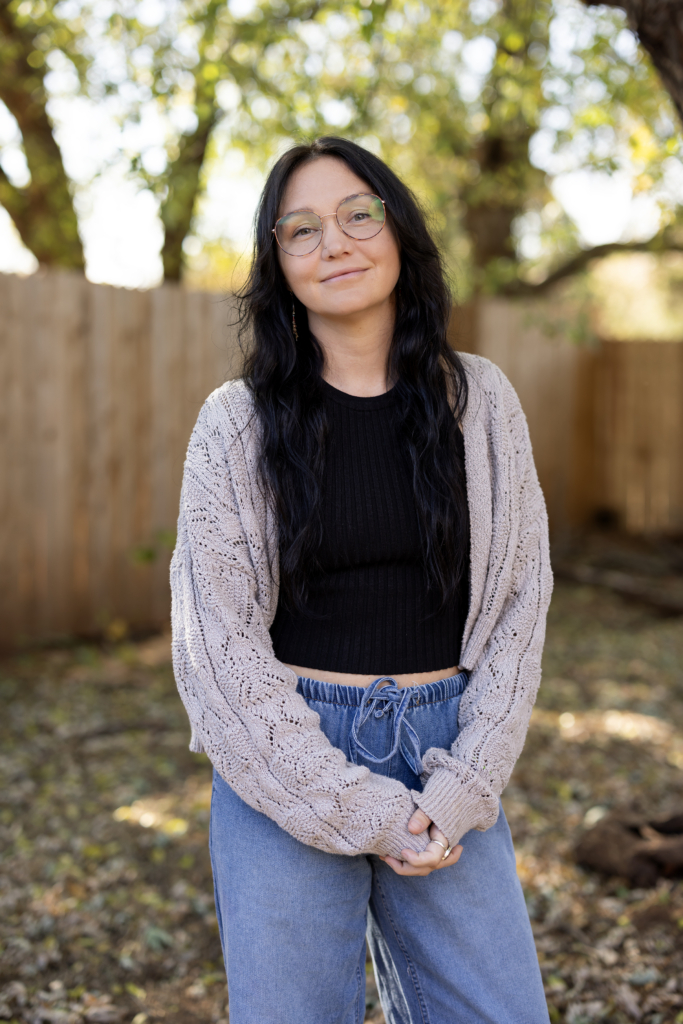
Masquat said the Tribe has been there as she pursued post-graduate education and even in building her counseling business, Scissortail Counseling Services.
“When I got out on my own I decided to do my master’s degree. I then worked at a non-profit as the clinical director. I thought, ’I want to do this in a way that feels true to me.’ I thought I’d call the Tribe and see where this goes,” she said. “I was surprised, but there were options for me and working with them was so easy. It was really amazing. That’s how I was able to open my business and do my own thing.”
Masquat has a unique perspective, having received support for her living situation as a child, for her education and as a business owner. She believes that opportunities are available and only limited by imagination.
“Honestly, thinking about the help that I have received is (it’s important) for people to reach out, because it’s surprising who’s willing to help you and who is willing to support you that you might not even think of. If you don’t ask or you don’t use those resources, then you’ll never know,” she said. “I think it was exciting that there were people who were there to back me up and say, ‘You can do that,’ and, ‘Support your dreams and the things that are important to you.’”
Professional growth
The married mother of three and successful business owner primarily counsels patients with mental health and substance use issues.
She is also interested in alternative forms of medicine therapy and research, hoping to find the latest methods that will benefit her patients.
“I do work with mental health as well in a program with the California Institute of Integral Studies, which is focused on psychedelic medicine therapy and research. There’s a lot of research with veterans with substance use, using different medications and plant medicines for treating that, so that’s something I’m pretty interested in, especially for the people I work with.”
She also started the Oklahoma Psychedelic Professionals Network to bring professionals together who are supportive of psychedelic medicine therapy research and starting a dialogue in the community of people who are interested in it.
Masquat chose her career path because of the experiences she had growing up.
“When I finished my bachelor’s degree in psychology, I always knew I wanted to help people, I just don’t think I really defined how I wanted to do that. I was scouring programs and there’s a lot of different options for therapists, a lot of different master’s programs in the state,” she said.
“When I saw that there was one specific to mental health and substance use, it was like everything that I had experienced up to that moment just clicked. I thought, ‘Oh my gosh, you can give so much back. You can make meaning of all these things that you’ve gone through by helping other people.’ It was like a way to make meaning of my own experiences. And it has absolutely been so rewarding, it really has.”
Masquat, a Rhodd/Bruno family member, may not have had every opportunity to experience Tribal culture growing up, and she is looking forward to immersing her children in as much CPN culture as possible.
“Having changed the trajectory of a lot of things for them, having gone through that experience myself and having to use those resources myself. That goes into the next generation, right? I have this knowledge and these resources and I can say, ‘These things are here for you to do, to use, to support you, to help you.’ It’s already something we’re talking about,” she said.
She looks forward to maintaining and strengthening those connections.
“When you open that door and you realize that that is an option, then you see it’s kind of always there, right? There’s always somewhere to kind of turn to; support is there. Is there something that I could utilize there? And I would encourage everyone to do that and utilize those things,” she said.
Marking accomplishments
She encourages other people to take time to celebrate their own accomplishments.
“It feels kind of weird to say, ‘Oh, I’m really proud of myself.’ But I really am, because putting myself in hard situations and doing things that I don’t think I really thought that I could. And then when you do see you are getting support from people around you or people do really care, it just increases your likelihood to move forward and have more faith in yourself.
If you would have told 18-year-old me that I would have done all those things, I don’t know that I would have believed that. I think I’m the first person in my immediate family to have completed (college) and certainly a master’s degree,” Masquat said.
“Honestly, I’m proud of myself that I was able to overcome. I’m filled with a lot of gratitude for the people who have supported me, whether it’s been within the Tribe or outside of the Tribe. In my family, the people who have been supportive, my friends, family, friends who’ve become family. Having that support completely fills me with gratitude. I’m proud that I didn’t give up, I decided to do it and I actually did what I set out to do.”
Learn more about Masquat’s counseling services on her website at Scissortail Counseling Services or contact her at 405-625-1665.