A Citizen Potawatomi Nation tribal member has helped add an Indigenous perspective to a theatrical production about the mysterious fate of an English colony.
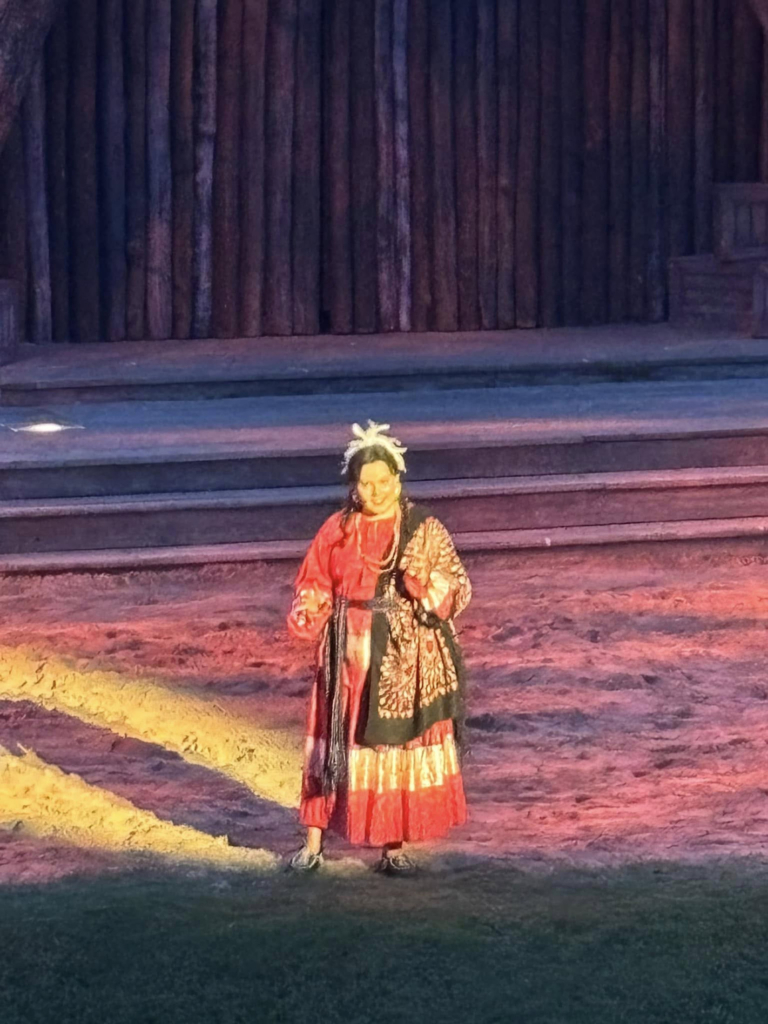
Livi Greco, a member of the Melot and Navarre families, performed during the 2025 season of “The Lost Colony” at the Waterside Theatre in Manteo, North Carolina. The play features both Indigenous and non-Native performers.
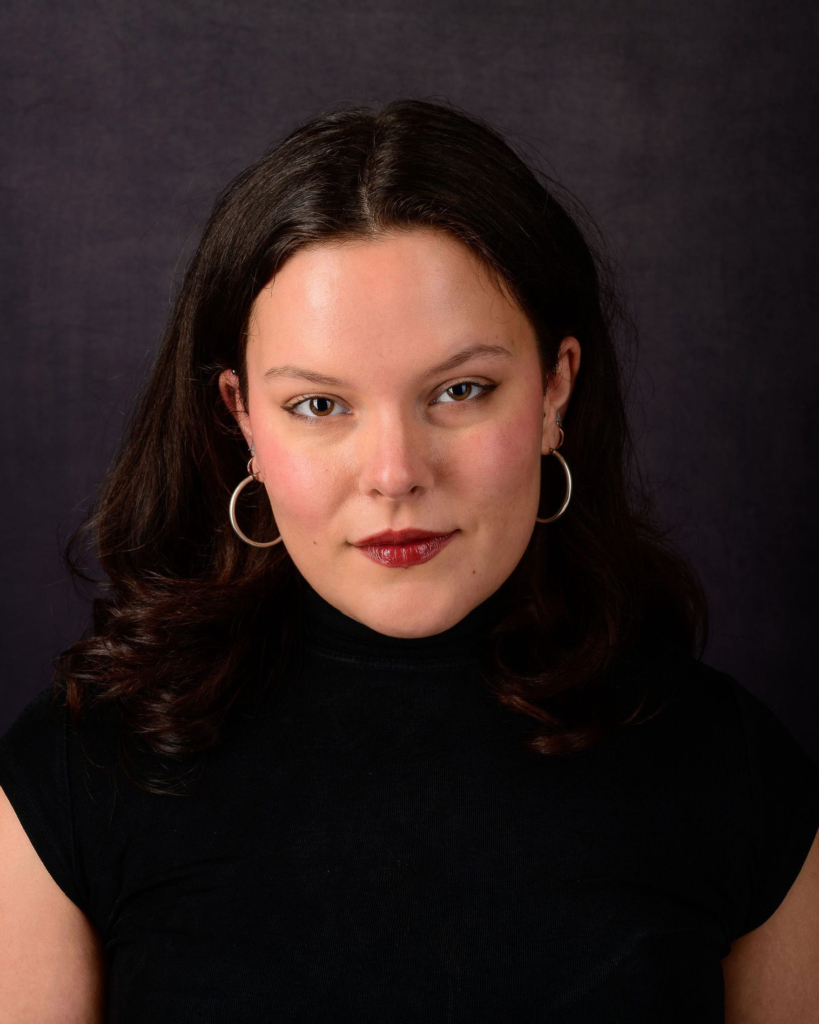
“’The Lost Colony’ has been running for 88 seasons, and it’s an outdoor drama. There’s singing, dancing, monologues and dramatic scenes. There’s a giant boat prop and (the production is) right on the beach. Directly behind the theater is the water. There’s just a little deck, and we’re on stage right above the waves,” she said.
The play tells the story of the first attempt at colonization in America and has been running continuously since playwright Paul Green wrote it in 1937. “The Lost Colony” received a 2013 Tony Award for Excellence in Theatre.
Greco met the director of the production at an audition in March and jumped at the chance to participate. She majored in theater and history at the College of William and Mary and has had a love of performing since she was a toddler, she said.
The history
Walter Raleigh, an English soldier and colonizer, sent a militarized group to North America in 1585 to set up a fort and an English colony near what would become North Carolina. The first colony ran out of supplies and many of the inhabitants disappeared.
Raleigh attempted another expedition in 1587, this time on Roanoke Island. After the colony was established, Raleigh returned to England for more supplies and planned to return in a year. However, he did not return for three years. After he arrived, he found the settlement abandoned and could not locate any of the 117 men, women and children. The Roanoke settlement is remembered in history as the Lost Colony.
The Carolinas had been home to Algonquin people long before Raleigh’s expeditions. Archeological research indicates the Algonquin had lived in the area for more than 800 years before Raleigh’s arrival.
Greco said the theatrical production of “The Lost Colony” incorporates the story of the area’s Indigenous people. A Native pre-show production features the songs and dance of Plains tribal powwow dances as well as the dances of Woodlands tribes. Indigenous cast members educate the audience about the diversity of Native culture.
With her background in theater and history, Greco has particularly embraced learning about the Indigenous people who are at the center of the story.
“I’ve been learning a lot about the Algonquin tribes out here because I like to do my research, being so involved in history. I have been learning about that and it’s very cool to see the connections between Potawatomi history and some of the tribes that are closer to this area,” she said.
The Tuscarora Tribe’s ancestral lands were in North Carolina before colonization forced them to migrate north and eventually join the Haudenosaunee Confederacy in New York. Members of the Tuscarora Tribe help ensure the Native cast members are well-versed in their culture.
“We’ve been learning their dances and songs; it’s just very interesting to see the similarities and differences between the cultures,” Greco said. “I’ve also learned a lot about bird symbolism in Algonquin tribes, and I found that very interesting. There’s a lot of bird motifs and in their traditional tattoos and regalia.”
The performance
“The Lost Colony” began rehearsing at the beginning of May, opened at the end of May and performances ran through the end of August. Each night, Greco and the cast performed for an audience of thousands.
She was excited to take on the commitment, largely because of her Potawatomi ancestry. Greco was the first Potawatomi cast member in the show’s history.
“I was very excited to be a part of something that is so historical,” she said. “I wanted to also be a part of this Native ensemble here that’s still growing and finding its identity.”
Despite the long hours spent rehearsing and performing, Greco relished the opportunity to be part of “The Lost Colony” production. The local community was welcoming, making the experience special, she said.
“I think the community is really cool because you’ll walk around town and you’ll meet 10 people who have also done the show when they were your age. There’s so many people here from all over the country,” she said. “It’s very interesting to be in such a special place with all these people who are all into the same show.”
Dealing with the North Carolina summer heat was a challenge, and at times, the cast even performed in the rain.
“I would say it’s a constant battle against the weather out here,” Greco said.
Weather-related and other challenges are nothing new for the production. Most recently, the Aug. 20, 2025, performance was canceled due to the potential for high winds from Hurricane Erin. A fire in 1947 destroyed the theater, but it was rebuilt within six days and the season continued. Hurricane Donna in September 1960 destroyed the Waterside Theatre, but it was completely rebuilt before the 1961 season.
Some performers return the following season and Greco said she would love to return if given the opportunity.
“I hope to further the Indigenous representation that is already thriving in the show,” she said.
Greco has already lined up plans to pursue her dream in the near future. Following her performance with “The Lost Colony,” she will appear next as a singer on a cruise ship.
For more information, visit The Lost Colony.