
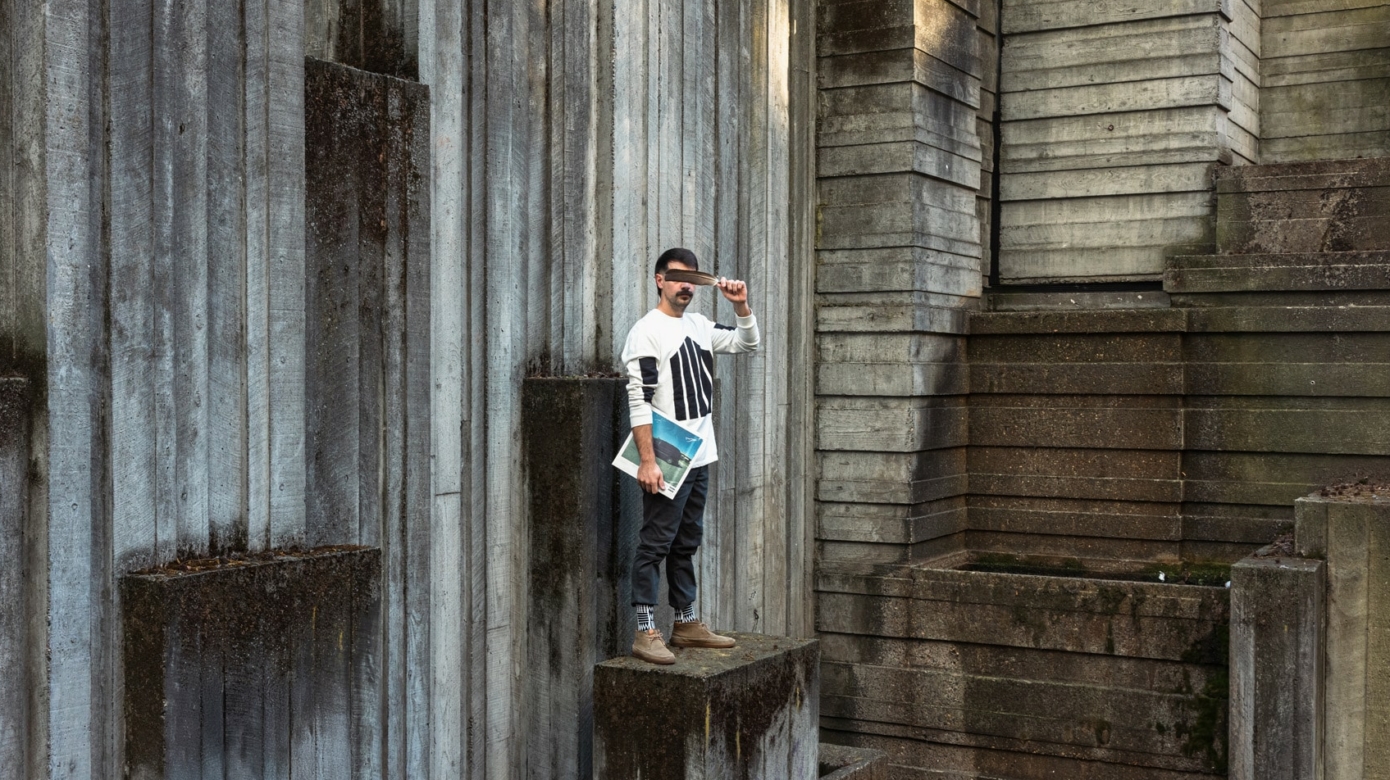
When Kendrick Lamar took the stage at halftime of Super Bowl LIX, one Citizen Potawatomi Nation Tribal member reflected on how much the Grammy-winning musician had accomplished.
Zac Schwiet is a graphic designer who was part of the team that created the art for Lamar’s first major label album release, called “good kid, m.A.A.d city.” The album became the longest-charting hip hop studio album in Billboard 200 history and Rolling Stone named it the greatest concept album of all time.
Today, Schwiet and his wife own their own design studio in the Pacific Northwest, Wasaki Studio, where they work with some of the biggest names in the music business and the corporate world.
Schwiet had always been interested in graphic design and film production. He studied visual communication in Seattle and later received two internships in the music industry.
“Those two internships really set the foundation for my career. One of them turned into a job that I had for four years. So that (graphics) studio is actually the studio that did the Kendrick Lamar album,” he said. “It was the summer after I graduated from college, and at the time we didn’t realize it was going to be as big as it was.”
Schwiet’s boss and Art Director, Don Clark of Invisible Creature, at the time had designed albums for over a decade and had a large portfolio of work, including artists like Nirvana, Chris Cornell and Foo Fighters.
“At that time, it was a small team; there were just three of us. From the beginning, I was included in the process and I remember the calls that we had with Kendrick’s crew vividly,” he said.

Lamar’s creative team reached out to the studio for the album’s graphic design and packaging, including the cover, booklet and vinyl.
“Kendrick had a really specific vision. With that, Don established the design system with the graphic treatment of the photos and set up the type system, and then I did the rest of the production design and photo retouching. That was one of the first albums that I was given more responsibility to carry the design across all of the elements of the packaging,” Schwiet said.
Usually, the design process involves diving into the album to determine what the artist hopes to convey, but Lamar’s team shared that “good kid, m.A.A.d city” would be a narrative about Lamar’s childhood in the Compton neighborhood of Los Angeles, California.
“I remember finding (Lamar’s) SoundCloud and listening to the album he had previously put out. We were brainstorming ideas based on the information about the album and then pitched ideas for it,” Schwiet said. “The photo-film aesthetic was one of the pitches that Don made, applying a visual treatment to the photo, to put it in that Polaroid frame.”
Lamar had family photos in mind that he wanted to use. One of Lamar sitting with his uncles and grandfather, the other of a minivan, both with the Polaroid frames, were used on both the original release and on the album’s deluxe version. Kendrick wanted everyone’s eyes obscured in the original album photo, except for his, signifying the innocence of a child in a difficult environment.
Album’s impact
Schwiet is grateful for the opportunity he had to contribute to an album that so many people have connected with these past 12 years.
“Any project like this has so many hands touching it. I just feel grateful that I got to be one of the many,” he said.
Schwiet and his son recently saw the album cover at a local store.
“They had that album front and center on one of the displays. I told my son, ‘Hey, you know your dad worked on that.’ And he said, ‘Whoa, you worked on that?’ At first I wondered why he was reacting this way because he doesn’t know who (Lamar) is. Then he said, ‘You worked on something that’s in Walmart?’ That gave me a pretty good laugh.”
“Out of everything that I do, there’s something special about print projects. Digital projects that I do, they just live on the internet and maybe they’re seen one time. I love print projects because then there’s something physical that I can hold and connect with.”
Schwiet said it’s hard to comprehend how many millions of people have seen his work, even had it tattooed on themselves or displayed it in their homes.
In his work mentoring youth, this project has helped open doors of communication and connection, bridging generations through the music.
The design credits on the album’s liner notes credit the studio, not individual designers, but Schwiet remains grateful for the experience he gained during his time there. He has advice for those pursuing graphic design work or a similar field.
“There’re two important factors for breaking into this industry. One of them is someone giving you a shot, and that’s hard because that’s not something you can control,” he said. “It comes down to someone trusting you with the project. So if someone has to open the door for you, do everything you can to be in front of that door knocking.”
“Also, putting in the hard work and then not being afraid of asking for opportunities and being told no. The studio that I worked at, I had emailed them a few times as a college student, saying, ‘I’d be willing to sweep the floor if I could work there and learn from you,’” Schwiet said.
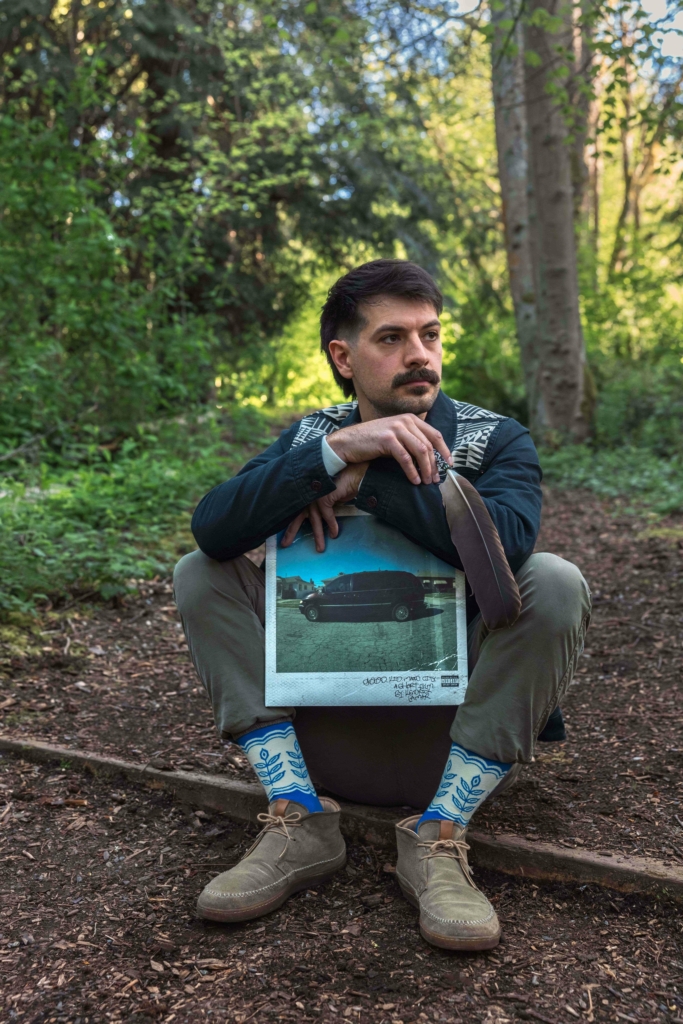
Melot family member
Schwiet, a member of the Melot family, grew up in Washington state, attended school in Seattle and began his career there. He currently lives on the Olympic peninsula and is raising a family in the home where he grew up.
He and his wife have two sons, ages 8 and 7. In a nod to his CPN roots, the family dog is named Shawnee.
“I would love to be closer to Oklahoma, but I am grateful for the Tribe’s work to keep us all informed and educated with many of us spread out around the country. However, I would love to use my skillset more for the Tribe in the future” he said.
Schwiet hopes to raise his children with a strong connection to their Potawatomi heritage. Both are enrolled Tribal members, and the family attends the Family Reunion Festival when they are able.
Schwiet and his wife have their own design studio. They serve a large variety of corporate clients, including Amazon, Microsoft, Walmart, Target, Chipotle, LEGO, Facebook and many more.
Schwiet also stays connected to the music side, both in graphic design and in video production for different music artists. He has worked with U2, Jelly Roll, Twenty One Pilots, Lecrae, Andy Mineo, Young the Giant, Kings Kaleidoscope, Citizens, Kutless, Aaron Gillespie and more.
To learn more about Schwiet’s work, visit the Wasaki Studio website, wasaki.studio.