By Mio Dykstra, CPN Public Information Intern
CPN Women, Infants, and Children (WIC) van has undergone updates to its appearance and improvements in comfort.
The van had its windows tinted last summer, followed by receiving a fresh exterior wrap with images of nutritious foods like fruits and vegetables along with the current CPN WIC card.
Nutrition and Breastfeeding Coordinator Cheryl Richardson explained why it was time for the WIC van to finally get a makeover.
“The wrap was cracking, because it sat during COVID, and it was done in 2015. It’s old, so we’re just doing an update on it — a facelift, per se,” Richardson said.
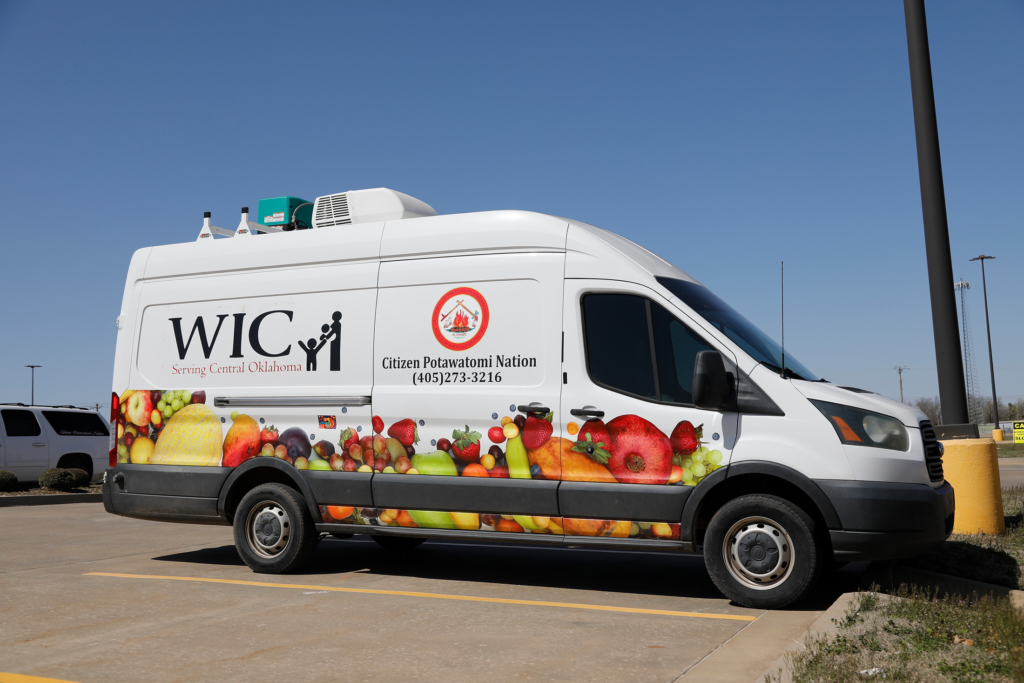
In addition to rewrapping the van, they also installed a new generator and a unit to cool the vehicle.
“We had an older gas generator that was very loud and shook the whole van. We wanted to get one on top [of the van] that’s run on propane, so it’s very quiet, very user friendly and not stinky,” said Richardson. “We have a portable heater and A/C, but they just don’t do the job when it’s really hot or cold. It’s just not keeping the back cool, and that’s where we weigh, measure and do hemoglobin for the kids and babies.”
They also added outlets to the van that run off the new generator so they can plug in computers and other electronics they use.
The renovations to the van were complete early this year.
“It’s like a little clinic inside the van, and we’re trying to make it more comfortable,” she said.
The beginnings of the WIC van
During 2013 or 2014 in a meeting with WIC’s branch chief, Richardson was asked what she needed to have a successful organization. She jokingly made a comment about how a mobile unit would be beneficial. The branch chief loved the idea and suggested Richardson use a high-roof, extended van and equip the inside to turn it into a mobile unit — all with a $50,000 budget.
Throughout that time, WIC services were having difficulty with the clinics they were traveling to due to rent prices increasing and partner organizations closing and moving to different locations. Most mobile units during that time cost close to a quarter of a million dollars because they were similar to RVs. With the van, Richardson was still able to find a solution to the problem that was also affordable.
She said the creation of CPN’s WIC van has inspired others to follow their lead. In Texas, CPN’s specs were used to create a fleet of WIC vans, and other tribal WIC organizations have also added mobile units to use in smaller clinics or remote areas.
“Our van was the start of many other agencies creating their own mobile units,” she said.
The WIC van travels about three days a week to different communities in the service area, which include stops in Shawnee, north Oklahoma City, south Oklahoma City, McLoud, Perkins and Seminole. The CPN WIC program covers seven counties in Oklahoma.

About CPN’s WIC program
Women, Infants, and Children is a nutrition program funded by the United States Department of Agriculture’s Food and Nutrition Service (USDA FNS). Within CPN’s program eligibility requirements, individuals must qualify by living within CPN’s service areas or receiving care at specific tribal health clinics. Another requirement is based on income eligibility and may be met by showing the correct documentation for individuals who are recipients of food assistance programs. Pregnant women who receive Medicaid will also qualify for CPN’s WIC program. Once clients meet the requirements for the program, they can receive nutrition education, food packages, and referrals to doctors or other beneficial programs.
In the state of Oklahoma, there are 10 WIC programs: one administered by the state and the other nine by various tribal governments, including CPN’s program. CPN’s program predominantly serves tribal members but will serve anyone who meets the requirements.
For more information, visit cpn.news/wic.