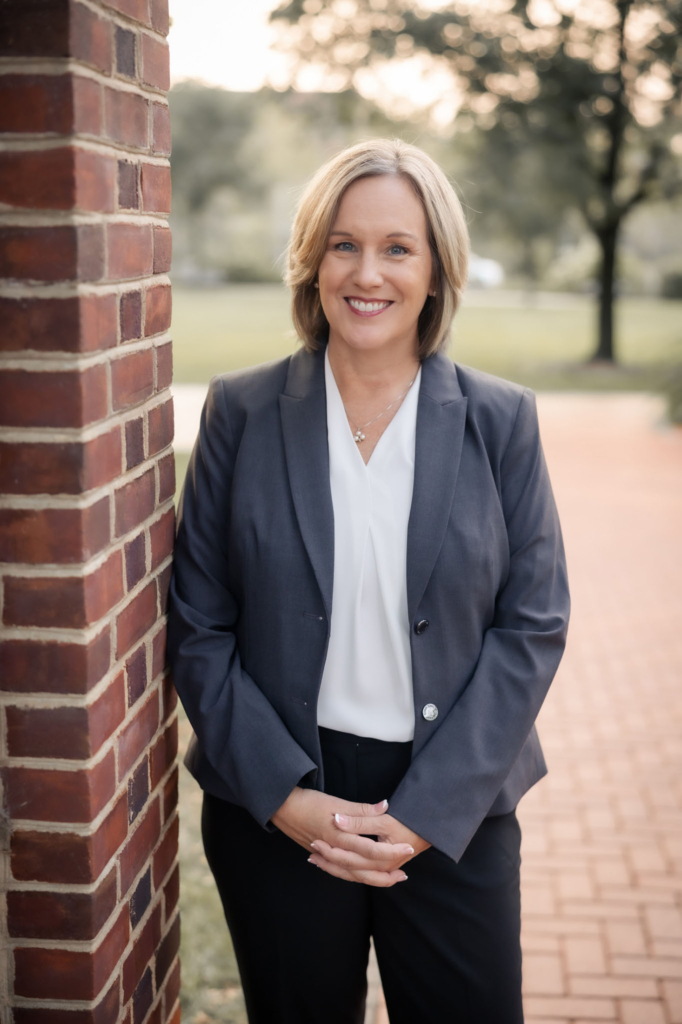
Annie Slease created the Mental Health Literacy Collaborative to help communities better understand mental health. She hopes to expand her work to include Indigenous communities.
“The Mental Health Literacy Collaborative is a national nonpartisan nonprofit, and it’s focused on an evidence-based framework called mental health literacy. We bring that framework to schools and communities,” Slease said. “We teach how they can use it to build knowledge and confidence about mental health.”
Slease, a Wano family descendant, grew up in Oklahoma. She was a classroom teacher for 25 years, taught middle school English and even directed school musicals.
“In those years, I was also raising two children. My older child at 18 developed significant psychiatric symptoms, but I didn’t recognize them and neither did my child. My child had just graduated high school, but there was no mental health education in that high school. We were both unaware of what was going on until it got very, very serious,” she said.
Slease began writing an anonymous blog to help process her feelings. She wasn’t ready to share her name due to the stigma involved in mental health. Other people began to read it and connect with her story. Eventually, the support she received helped her feel confident to share her identity. After she did, she connected with mental health advocates in her area.
“I got involved with NAMI, the National Alliance on Mental Illness,” she said. “Ultimately, I realized that anybody can teach English and anybody can direct musicals. But when you’ve been impacted the way our family was, I felt like I had a story to tell that could really make a big difference,” she said.
Slease helped pass a law in her home state of Delaware that requires mental health education for kindergarten to grade 12. But the passage of the law was just the beginning. Without the infrastructure to carry it out, she said, a law may not be effective. She realized that teachers needed support to be able to teach about mental health.
“Educators, just like me, may never have learned about mental health. To require us to teach it, it’s a big ask. (MHLC) is sitting in that intersection. We help empower educators and leaders to understand mental health literacy so that they can not only know it for themselves, they can help others learn it at the right pace in the right developmental and cultural fashion that they need it,” Slease said.
The framework
Mental health literacy has four components, Slease said. The first component is understanding how to foster and maintain positive mental health.
“With or without a mental health diagnosis, you still should know how to take care of your mental health,” she said.
The second component is understanding common disorders and their treatment.
“Just like we understand very general information about diabetes, and we understand that something like insulin can help, we should understand that there are mental health disorders and there are treatments for those,” Slease said.
The third component is understanding how to seek help effectively, whether for yourself or a loved one.
“When we talk about that, we’re not talking about only a crisis like I described in my household. I didn’t have the knowledge to help my child early. But if I had mental health literacy, I would have known how to get help much earlier and it would have been a much easier process to seek treatment for my child,” she said.
The fourth component is understanding stigma and how to reduce it. Stigma is a primary barrier to care, Slease said. Stigma is the way society thinks negatively about mental health.
“We don’t understand it and we often have judgmental thoughts about it. And we make people feel inadequate or shameful about these real health conditions. That keeps people from getting the help they need,” she said.
Breaking stigmas
To break through those misconceptions surrounding mental health, language shapes perceptions.
“If we could dissuade people from conflating the idea of mental health as a mental illness, because they’re not the same thing. We’re going to say that this person has a health condition, just like any other health condition,” she said.
Slease believes it could take a generation to shift the conversation, but starting the process begins with our youngest community members.
“By starting it at our very youngest ages, they can grow up understanding this reality in a much more inclusive way. It can be done, but it’s not going to happen overnight, and it’s not going to be one school program or school assembly once a year,” Slease said. “It’s got to be a belief system. It’s got to start at the very youngest ages and be embedded into the fabric of the community. When my granddaughter goes to school and learns about her eyes, her lungs and her heart, she will also learn about her mind. Every child deserves that knowledge.”
Tailoring services to needs
Slease said the framework can be adapted to support Indigenous communities that have specific needs.
“When we’re dealing with generational trauma, generation after generation, that really becomes an issue that can become problematic in communities. Trauma is a primary risk factor for developing a mental health condition. Indigenous groups, as well as other marginalized groups, face higher rates of mental health and substance use disorders. But that doesn’t mean that treatments aren’t possible,” she said.
According to a 2022 report from the Substance Abuse and Mental Health Services Administration, 19.6% of Native American adults experienced mental illness the previous year.
Slease said treatment options need to serve populations appropriately and avoid a one-size-fits-all approach. Mental health literacy can be adapted to serve communities appropriately.
“We can bring mental health literacy into a community space through the voice of people who are (Indigenous), people who do understand what those challenges look like, and how we can talk about them safely and inclusively,” Slease said. “That’s what mental health literacy is meant to do. It’s meant to be an adapted framework that serves communities where they are through the perspectives and voices of members of those communities.”
Partnerships are an important way of helping to spread awareness, she said. MHLC works with various organizations who have a greater understanding of their community and its needs. From nonprofits to public education, to the Clinton Global Initiative, their list of partners is growing.
“This work is all about relationships. We are bringing them the mental health literacy framework, but we’re not making it land on them. We’re helping them develop plans and strategies to make it work in their spaces. And we’re continuing to develop new projects so that those communities and those various partners can use mental health literacy to elevate their own work,” she said.
By working with universities who educate future teachers, MHLC plans to reach Indigenous students who will be taught by those teachers one day.
“We’ve developed a one-hour training called MHL Aware. We’re bringing it to 30,000 pre-service educators during their college years. When they enter their teaching professions, they already know mental health literacy and they’re bringing it into wherever they’re going to work,” she said. “If we could offer that to students in universities in and around Oklahoma, who will ultimately serve Indigenous students, that is how we bring mental health literacy into communities effectively. We can find those university partners and offer that training to students at no cost.”
Support for the training is available through the Clinton Global Initiative’s Commitment to Action.
“Our CGI project is open to all colleges and universities but because of my Potawatomi heritage and connection to Oklahoma, I personally hope to reach education students in and around the state.”
Long term goals
MHLC is available to work with any tribal organization, whether education or health care related.
Slease hopes to make mental health literacy something that people don’t think of as a program. It becomes part of a community’s knowledge base and in turn, she said, helps ease the burden on crisis care systems and mental health providers. She envisions a time when people see mental health as part of their overall health.
“When mental health literacy is embedded in the fabric of these communities, we’re going to see suicide rates go down. We’re going to see overdose rates go down. It will be when people recognize mental health as part of health. Individuals who are talking about their own health conditions openly and not with shame,” she said. “I’m not ashamed to tell you that I wear contacts, or I couldn’t see to drive. But people are ashamed to talk about seeing a therapist. They’re ashamed to talk about taking medication or receiving inpatient treatment for substance use disorder. That shouldn’t cause people shame.”
“We just need to have the information, and we need to understand it at a level that it becomes inherently our knowledge. That’s why the framework is so important. It needs to come out of voices that are trusted in each community. My dream in Indigenous communities is not that I’m teaching it, it’s that I’m talking to trusted leaders in these spaces and we’re talking about it and we’re breaking it down and they’re adapting it to meet their community’s needs most appropriately.”
To learn more, visit the Mental Health Literacy Collaborative website at themhlc.org.