
The CPN Eagle Aviary celebrated the golden eagle, Kishko, for his second birthday in May. Kishko can be found perched on a glove or tethered during visits to the Aviary.
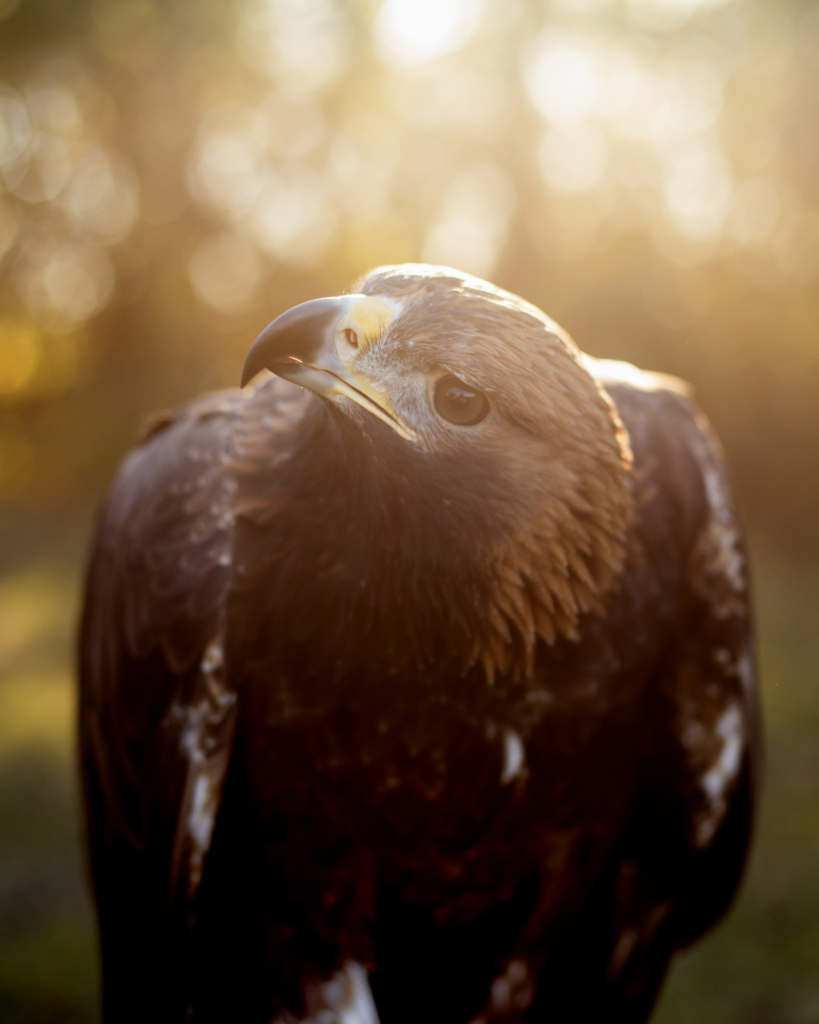
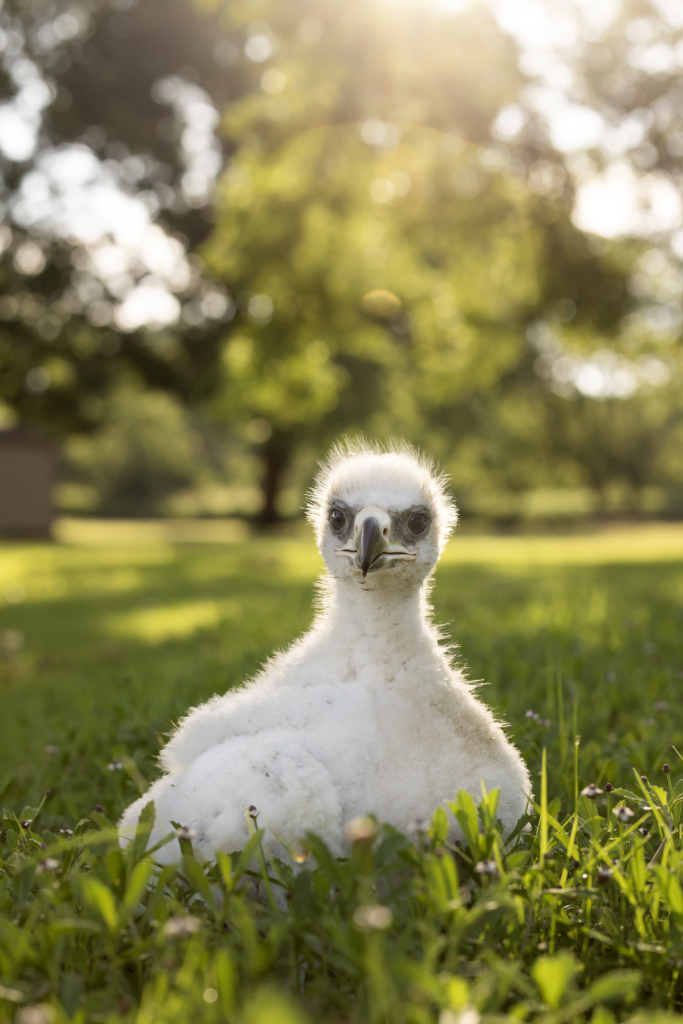
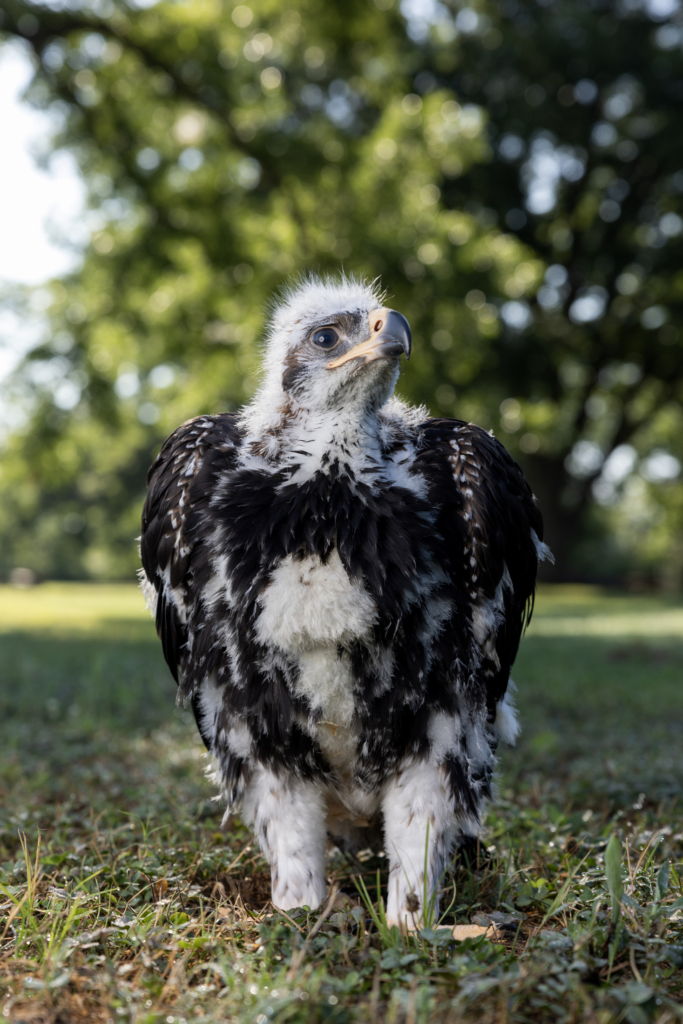
Kishko, which means “second born,” hatched May 24, 2024. His parents laid two eggs that season, and the first to hatch was a female. Kishko hatched a few days later, making him smaller than his sister, which put him at risk of being bullied.
Aviary Managers Jennifer Randell and Bree Dunham observed the eaglets as long as possible, trying to avoid imprinting. Eventually, they removed Kishko from the nest to give him a chance at survival because he was not receiving adequate care in the enclosure.
“Our number one job for Kishko and every resident here is to provide them with the best quality of life we can, and that looks different for every individual,” said Randell.
Randell and Dunham took him into their home in an incubator where he could be monitored and fed every two hours for the first few weeks.
Personality
“Being hand raised from four days old, Kishko is a full imprint,” said Randell. “He doesn’t identify as a bird. He thinks he is one of us.”
The sisters shared that he has preferences for who feeds him, how he is fed and that he knows how to get what he wants.
“We spend a lot of time together, sometimes answering emails or fielding phone calls, and when he wants your attention on the glove, he’ll lean in like he’s going to take a big bite of your face,” said Randell. “That’s hard to ignore.”
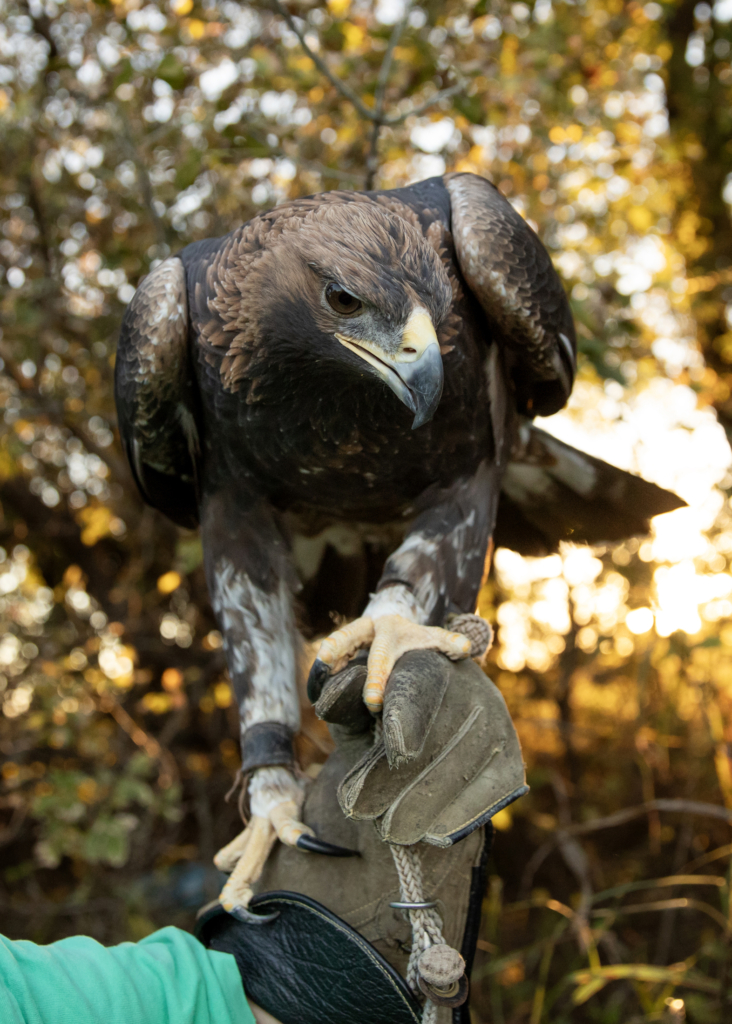
Randell and Dunham explained that his needs differ as a full imprint compared to the non-imprinted eagles and hawks.
“Eagles are a lot like horses in that they have a good sense of energy and trust,” Dunham said. “There’s a feedback loop between us when he’s on the glove. We can sense his energy as much as he can sense ours.”
The Aviary managers described Kishko’s personality as playful, curious and energetic.
“He spent a half hour chasing a cricket in the grass and was startled each time it would jump up out,” Randell said. “He still turns his head upside down or backwards to look at things rather than turn around. He’s protective of his space and very vocal when he sees the wild eagles or geese fly in. He’s been chatty since he was small.”
The sisters also shared other parts of his fun personality such as his love for standing in his water pan before a bath and mock-killing sticks and rocks. One of his favorite rocks to mock kill came from the Yellowstone River near where his younger siblings were released in Montana.
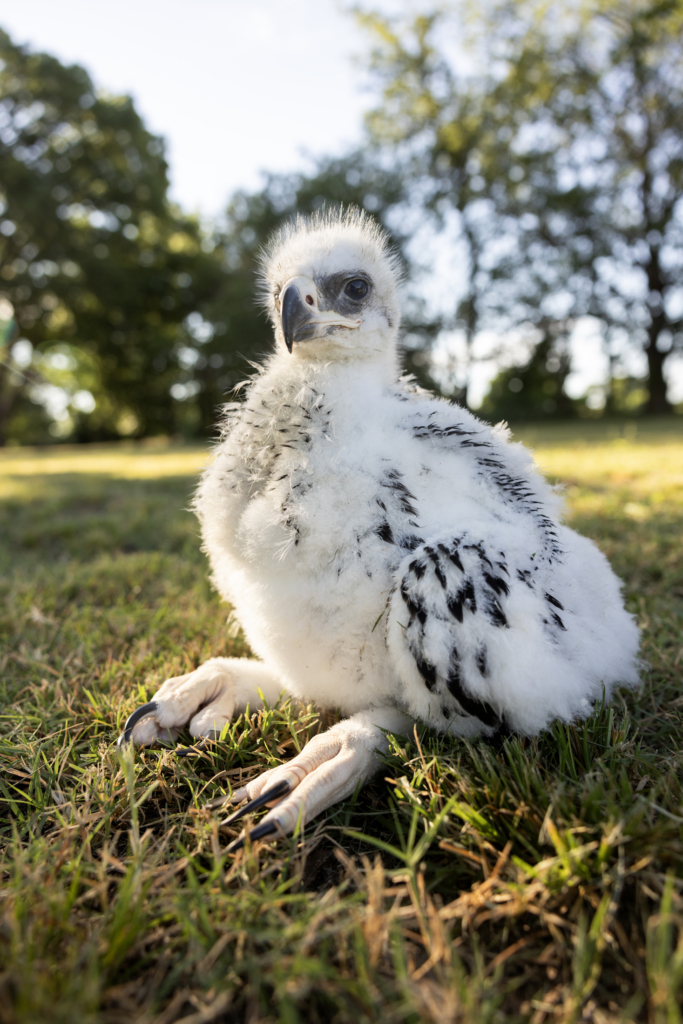
While Kishko is fully imprinted, the Aviary managers work to balance his human interaction with natural instincts.
“We provide him with as much natural enrichment as we can and expose him to as much of the natural world as possible. He is free lofted in his enclosure, with no jesses or leash, for flight and muscle development,” said Randell.
Randell said they also provide logs, sticks and rocks for him to perch on.
“It is our responsibility to make sure he is conditioned, well adapted and adjusted to people and different environments to create that balance so he does not have stress,” she said.
Developments
At age two, golden eagles begin to mature. During breeding season, Kishko has become vocal and started to show breeding behaviors.
“Goldens in the wild might begin courting but wouldn’t spend the same amount of time with their potential mate and won’t nest until they are four to five years old,” said Randell. “Kishko has accepted us as his mates.”
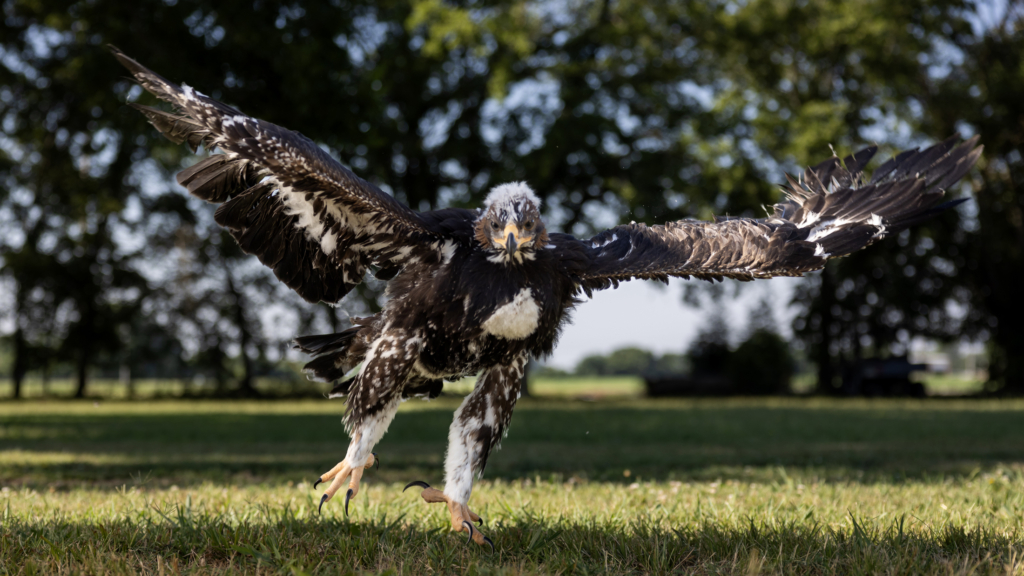
Randell and Dunham said that golden eagles are partial molters and carry tail and flight feathers from previous years. They also explained that his first molt of body feathers, starting at the head and working down the body, are normal.
“It takes roughly three to four years for a golden eagle to replace all its flight feathers,” said Dunham. “Molt usually begins March through May of their second calendar year and ceases for the year by November. As you may see from the recent photos, he is right on schedule, and he looks as if he has a comb over.”
Randell and Dunham also pointed out his eyes are lightening in color, similar to his father’s.
Daily routine
The sisters, alongside Kishko, begin every day with sema (tobacco) at sunrise. As Kishko matures, he has started to vocalize at dawn.
“When we go out to put our sema down and thank Mamogosnan (Creator) for him waking us up to a new day, he chatters and calls to us,” said Randell. “It’s a blessing and truly a gift to welcome the day with him.”
After cleaning his enclosure and checking on the other eagles, Randell and Dunham take Kishko outside to take in the sights and sounds surrounding him.
He enjoys getting his vitamins twice a week and expects dinner “promptly at 6 p.m. lately.”
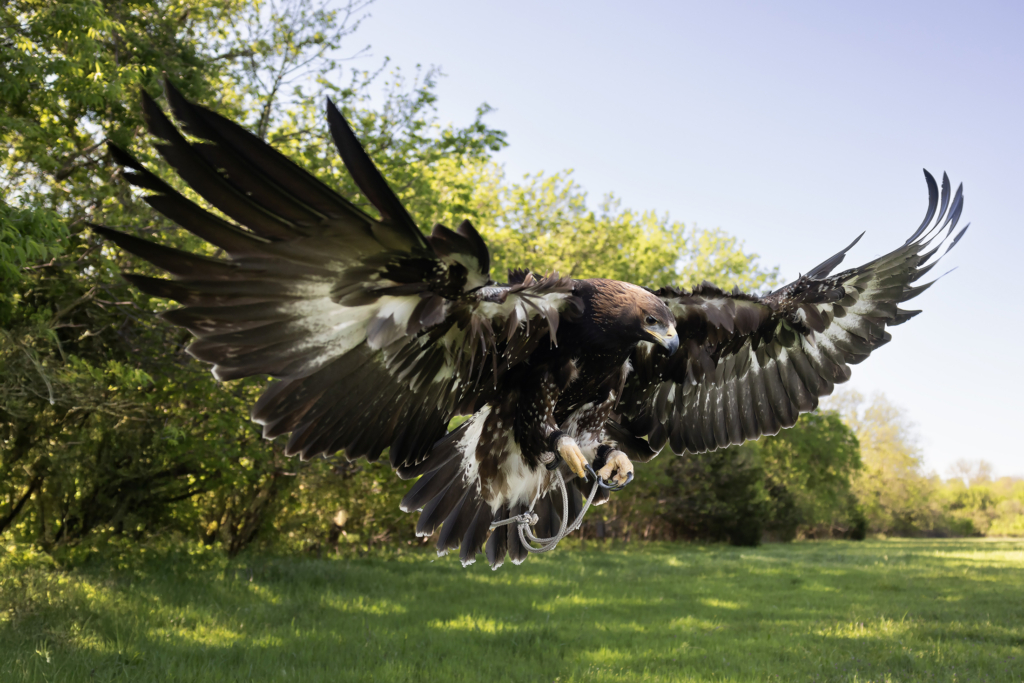
“Perhaps he remembers that as a regular part of his diet when he was growing. His favorite food is usually quail. However, he would love it if the resident cotton tail came within his reach,” Randell said.
At sunset, he returns to his enclosure for the evening. The Aviary managers spend five to eight hours with him daily.
On tour days, Randell and Dunham said Kishko has started to greet guests and seems to enjoy their company. He has become a familiar presence for many visitors over the past year.
To learn more about the Aviary or schedule a tour, visit potawatomiheritage.org.