Living in Pennsylvania, Tescier family member Amanda Funk often didn’t have access to cultural teachings or a way to connect to other Tribal members. Today, she is executive director and co-founder of Widoktadwen Center for Native Knowledge, where she hopes to offer these things to others.
“It was a concept that really was formed when I was in graduate school,” Funk said. “I was getting my master’s in English, but my focus was Indigenous rhetoric, and I wanted to know more about how Native people today situated themselves within a Native identity. And the more I tried to answer that question, the more I realized that there’s just so much diversity in the community that everybody’s experience is widely different.”
Funk sat with the idea for several years. Then in 2020, while working from home for a non-profit organization, she finally felt like she was in a knowledgeable enough position to take the steps to found Widoktadwen. With help from Penn State’s legal entrepreneurial assistance clinic and a jump start incubator for new small businesses at the Berks County Community Foundation Building, Funk and cofounder Alexi Weiskircher were able to get the non-profit off the ground.
About five years later, Widoktadwen has grown, as has its programming and community.
Today, its cultural resource center and administrative offices are located in Zion Spies Lutheran Church in Reading, Pennsylvania. The non-profit is also able to do its land-based education on the church property, where there are 28 acres of woodland, and host social gatherings in the social hall.
Workshops, day camps and more
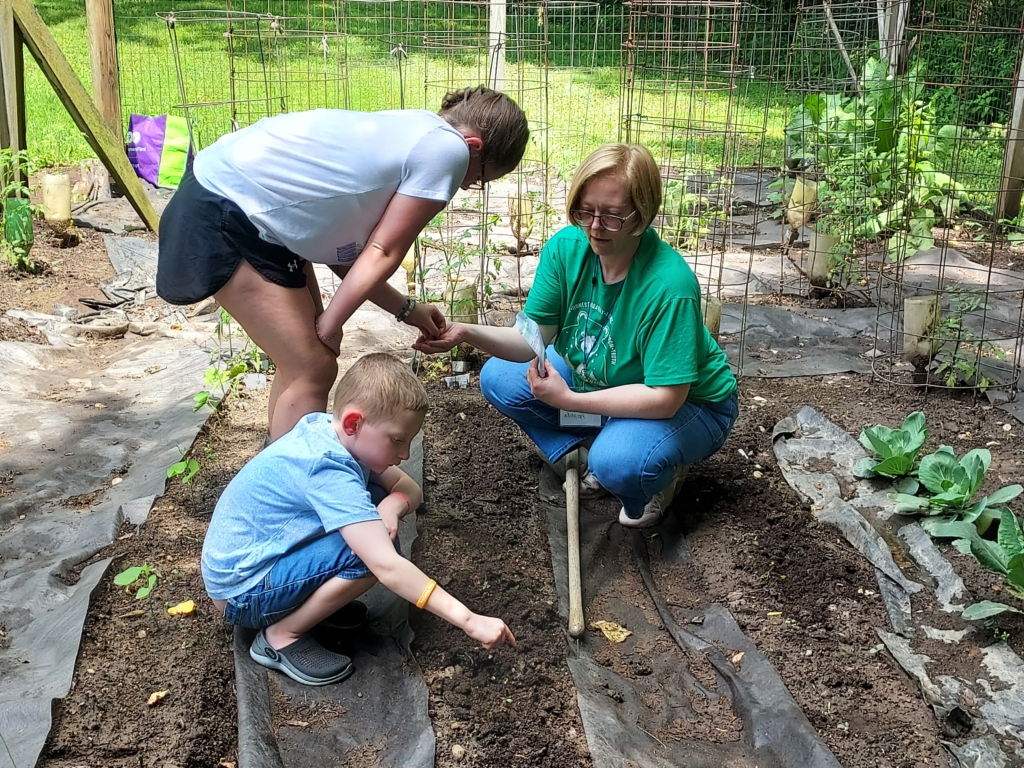
Widoktadwen offers things like a Native book club, a monthly beading workshop and other workshops on a variety of topics. Local libraries, school districts, community groups and museums often reach out for programming requests.
“Sometimes, when people ask what our organization does, I’m like, ‘What don’t we do?’ Because I feel like so much of what seems to be these different things are very connected. I look at it in terms of our holistic health, the health of the whole person,” she said, adding that health is not just physical health but also emotional health, spiritual health, health of our environment, and the health of our communities.
“So, it’s important to be stewards of community, stewards of land and water, because these are all things that tie into our overall health as Native people and people in general,” she said.
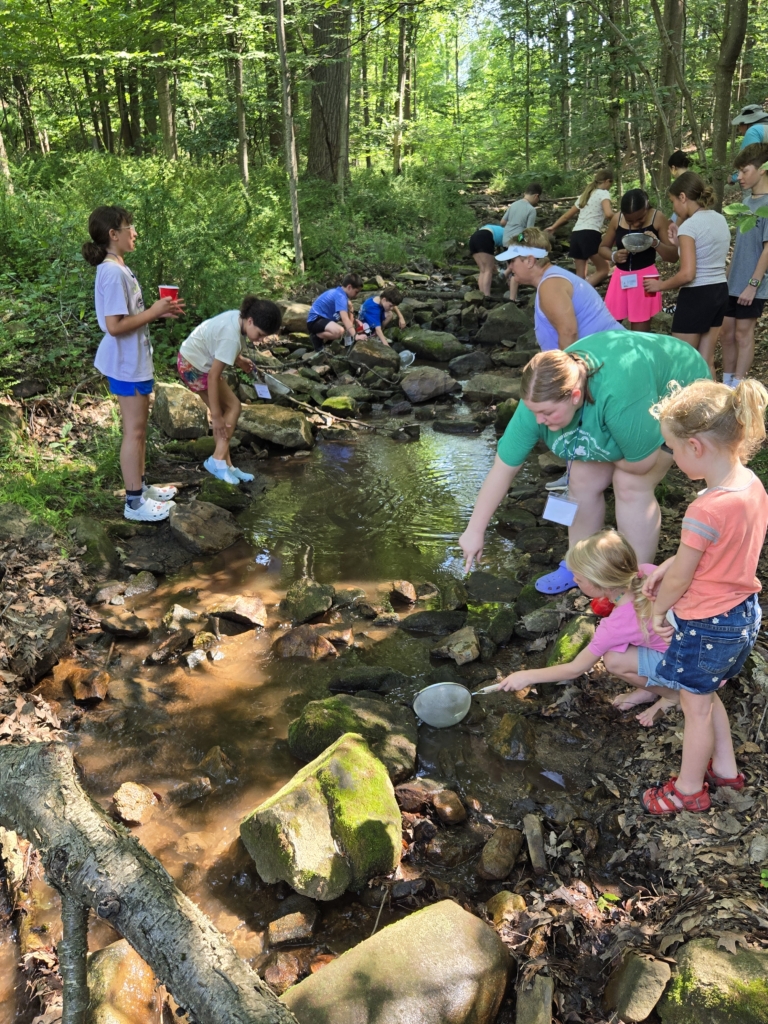
In 2024, a summer day camp program was added to the lineup. Each Wednesday for seven weeks, children are dropped off for the day and engage in activities that center around the Seven Grandfather teachings. The camp is open to all children, Native or non-Native.
“A lot of them have very minimal experience with nature. They haven’t fallen in love with it yet,” Funk said. “That’s probably my favorite part, is getting to share that wonder and joy and excitement that comes from that discovery and that connection with the nature all around us. Teaching them to see in a different way.”
Funk, who has gone through a community health worker training program, attends health fairs and has done presentations for health classes, including one at a university where students will be entering public health professions.
“I go in and teach them about urban Indian health and what are those considerations to keep in mind as you work with our community,” she said. “I’m glad that I get to introduce that to them early on in their educational journey in healthcare.”
Funk has also completed training on ecological gardening and managing woodlands, wetlands and meadows, as well as becoming a certified pollinator steward. With that knowledge, she has been able to do things like start a fenced-in garden for Widoktadwen. Inside are sections that include plants for fiber and dye, ceremonial and medicinal plants, edible perennials, and Three Sisters plants, as well as a mini orchard with pawpaw trees, serviceberries, chokeberry and other berries.
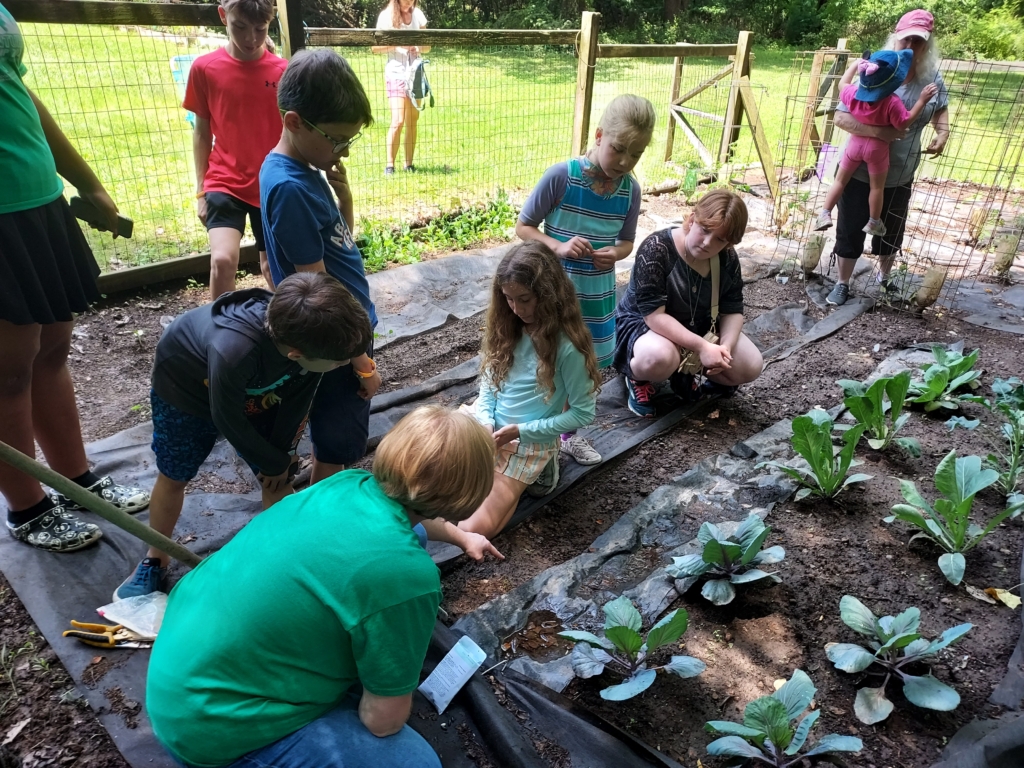
“I’m also a wild foods educator and a forager, so I would lead foraging walks and nutrition demonstrations,” she said. “It’s also a teaching garden, which is really important for our summer camp programming.”
Providing connection
Ultimately, Funk believes Widoktadwen is about giving Native people a way to connect and form a community, and it has found a diverse community in Pennsylvania.
“I had always felt like we were kind of isolated as Native people and Potawatomi people in this area. I learned that that was not really true. We were just not connected. We had no means to meet one another, to connect with one another,” she said.
Funk said they have had participation from many different tribes and Indigenous people — from CPN to Lenape to South American and Pacific Island tribes.
Looking at the data for Berks County, Funk was surprised to see that it has the highest population percentage in the state for urban Native people.
“So many other Native people that I’ve met here in Berks County have felt isolated, like there was nobody else, and our data indicates otherwise,” she said.
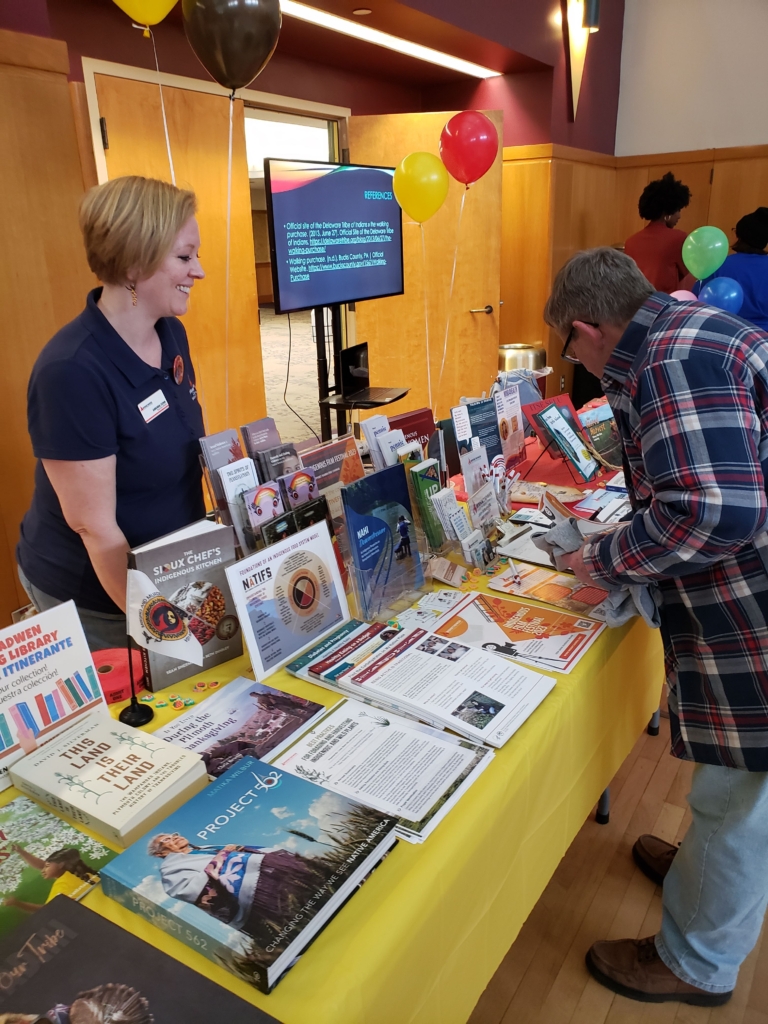
Funk said they have met many new people through outreach activities in the community, including festivals, events, the day camp, and a summer reading program. They’ve also formed connections through programming at libraries, museums and historical societies. Sometimes, she said, she meets people at health fairs or university events.
Funk even talked to one woman who came to a beading workshop because the church is her polling place and she saw a flyer while voting.
“It’s been a blessing that the people who have engaged with our programming end up repeatedly coming back,” she said.
Filling a need
Last year, Widoktadwen also stepped in to fill a gap when families faced the suspension of SNAP (Supplemental Nutrition Assistance Program) benefits.
“Fall was a particularly difficult season. Most Americans are struggling with affordability,” Funk said, adding that many faced rising food and health care costs. “We’re seeing it everywhere.”
When SNAP benefits were suspended, Funk and others involved with Widoktadwen started to discuss the best ways to offer support to those in need, ultimately deciding to set up a mutual fund.
“We thought about what if it opens back up and SNAP benefits go out, then what? Are we still going to do it? And I said, ‘Yeah, I still want to do it.’ Because it’s still hard, and there are plenty of people who are still struggling,” Funk said.
A mutual aid fund, she explained, is not supported by grants, companies or government organizations, but instead is funded solely by individuals. Through donations, Widoktadwen was able to raise over $2,000 in mutual aid donations.
Those funds were used to distribute grocery gift cards to families all over the country, with most applicants coming from Oklahoma but also families in districts 1, 2, 5 and 7.
“I think it’s important that community comes together and tries to think of a way to address the problems and we consider what resources we have at our disposal. Who can move some money out to people quickly? And the best way to do that is just as a community,” Funk said. “How can we move this kind of aid quickly and have it be something that didn’t come from Widoktadwen? It’s not my money. It’s our money. It’s the people’s money. They gave it to us to steward and to distribute to those in need. And that’s our role. I’m a facilitator. I’m just that pass-through entity to get those funds from our community out to our community.”
To learn more about Widoktadwen, visit widoktadwen.org.