
The Citizen Potawatomi Nation Eagle Aviary released two golden eagles near White Sulphur Springs, Montana. They are the first golden eagles hatched in captivity and released into the wild by a Native American aviary.
An aviary milestone
The aviary received its U.S. Fish and Wildlife permit and opened its doors in June 2012. Aviary Managers Jennifer Randell and Bree Dunham were inspired to start the aviary when their family was honored with a golden eagle feather, presented to them after their mother unexpectedly walked on. This special gift set them on a new path, and they went to Tribal leadership with the idea of starting an aviary together.
“That one traditional material gift changed our life,” Randell said. “That’s why it’s so important that our Tribal members have access to eagle feathers.”
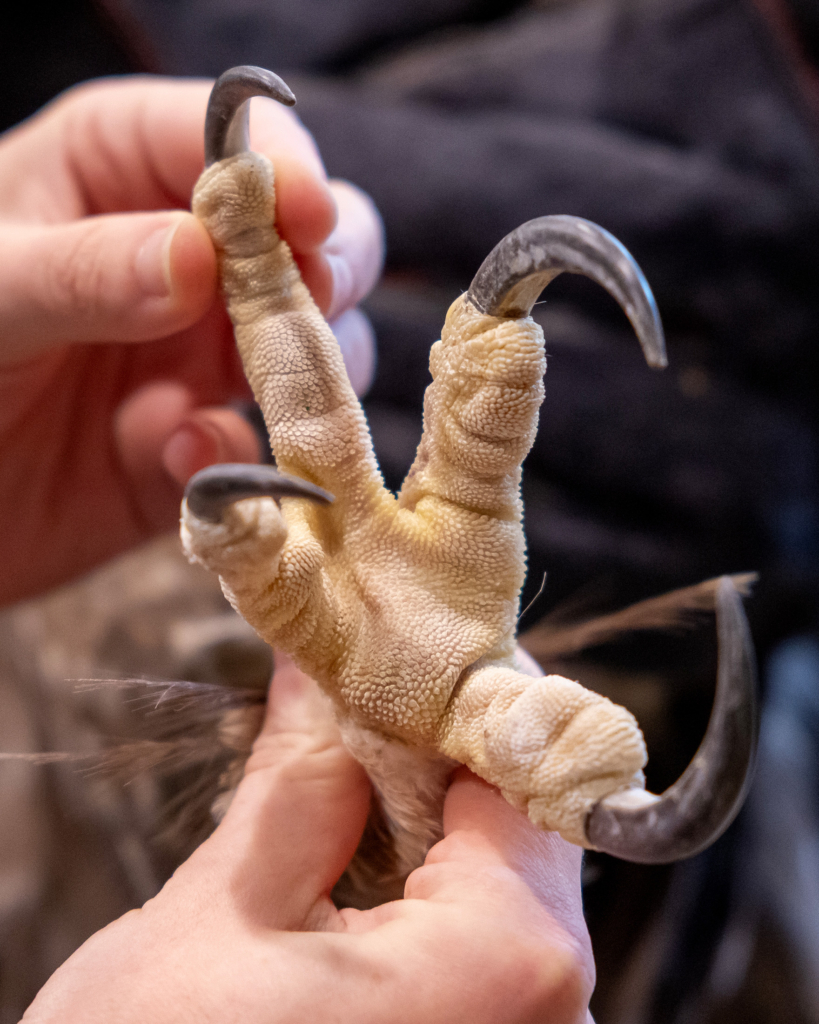
Home to 16 eagles, the aviary has 13 bald eagles and three golden eagles. The aviary has successfully released two bald eagles in Oklahoma, one rehabilitated in 2013 and one that hatched at the aviary in 2017. The two golden eagles released in the fall mark a milestone for the CPN Eagle Aviary.

Golden eagles Dokmeté (Peace Within) and Wzawnemki (Yellow Thunder) began nesting in the fall of 2024 and laid two eggs by March 2025. The golden eaglets hatched on May 6 and 7, 2025, in the middle of a spring thunderstorm. The first hatched was a female and the second was a male.
“They hatched within 12 hours of each other, which is really unusual, and it gave them a better chance of survival as they were close to each other in size,” Randell said.
The aviary managers took measures to ensure the eaglets did not imprint on humans.
“We kept them in the back of the facility, so visitors could not see them. We went as far as to put up extra shades to limit human interaction for the first six to eight weeks of their lives,” Randell told the Hownikan. “It was hard not to go in the enclosure and see those babies. Fortunately, we had cameras to monitor them, that way we were completely hands off. We took all the precautions we could and let the parents do what they naturally do.”
The eaglets were completely parent-raised, and Dokmeté and Wzawnemki did an amazing job raising the eaglets on their own.
The golden eagles were given Potawatomi names: Mnotagwzékwé (She Brings the Good News) and Nëmkis (Little Thunder). Their names symbolize thunder and lightning, which is especially meaningful as the eagles both hatched and departed from the aviary during thunderstorms.
“Thunder is when spring arrives and nature wakes up,” Randell told the Hownikan. “With their mother’s name being Yellow Thunder and the eaglets hatching in the spring, we had a sense of the direction we wanted to take their names. We also wanted something connected to lightning or to the idea of ‘she brings the light.’ In Bodéwadmi, we came to Mnotagwzékwé with Nëmkis.”
“We wanted the names to reflect the idea that they bring the good news because we are releasing them to the wild. We will soon be fully permitted to release any eagles hatched at our facility,” Dunham said.

Preparation and release
The aviary took special care to ensure the eagles’ safety and comfort during the long road trip to Montana. They lined kennels with cardboard and outdoor carpet for padding, then covered them with blankets to keep the eagles calm. The eagles also had a full meal the evening before the trip, so they were not released on an empty stomach.
Dr. Mattie Yates and RVT Jill Watson traveled to the aviary from WildCare Oklahoma to perform wellness checks on the eagles. Mnotagwzékwé weighed 12 pounds, and Nëmkis weighed seven pounds. They made sure the eagles were in good shape to be released and placed tail guards on the eagles prior to departure to protect their feathers during transport.
As Randell and Dunham loaded the kennels into the vehicle, the De’Wegen Kwek (Women’s Drum) sang a traveling song while rain and thunder echoed around them.
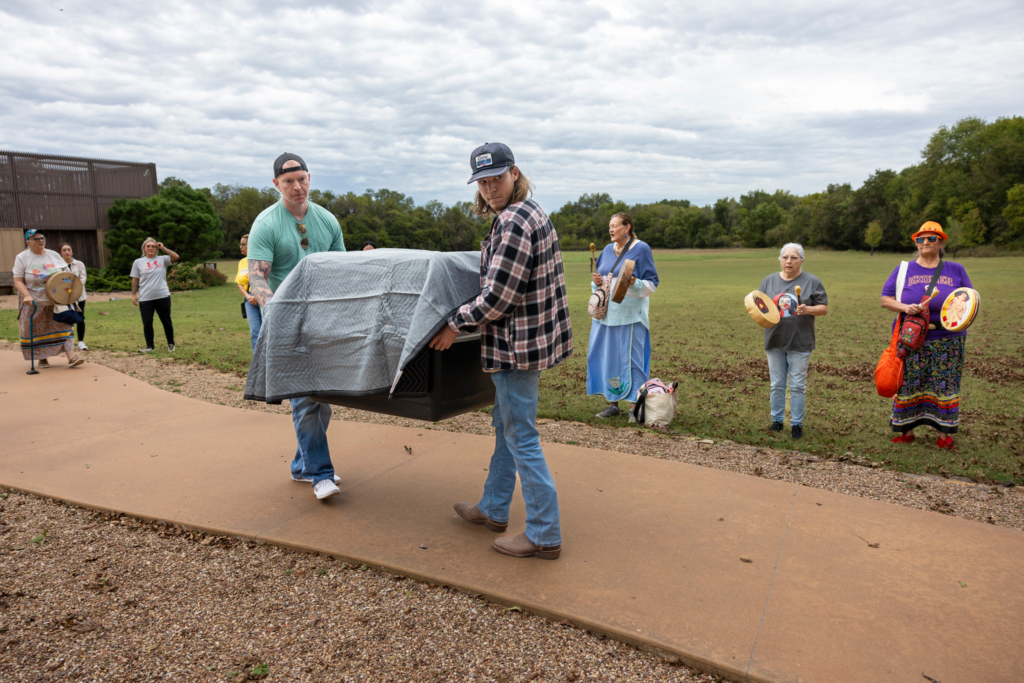
“The eagles handled the long road trip well. Eagles usually go to sleep in the car, so they were quiet during the drive. We did hear the eagles rouse, which meant they were comfortable with their environment,” Randell said.
The aviary has a long-standing connection with Rob Domenech, executive director and founder of Raptor View Research Institute, who installed telemetry on a bald eagle for the CPN aviary’s first bald eagle release in 2013. Continuing that partnership, the aviary coordinated with Domenech for the telemetry installation and release site for the golden eagles. Montana was chosen for its suitable habitat and large golden eagle population.
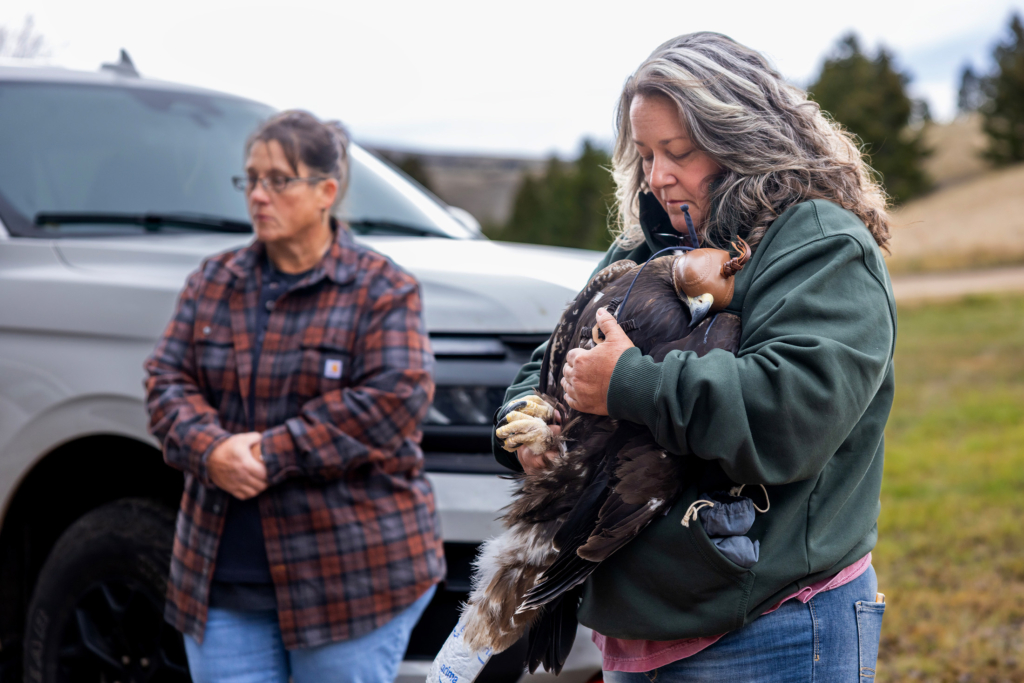
“Montana is golden eagle country. We hope these golden eagles learn from the other golden eagles in the area, which is why we released them close to one of the main migratory paths during peak migration,” Domenech said.
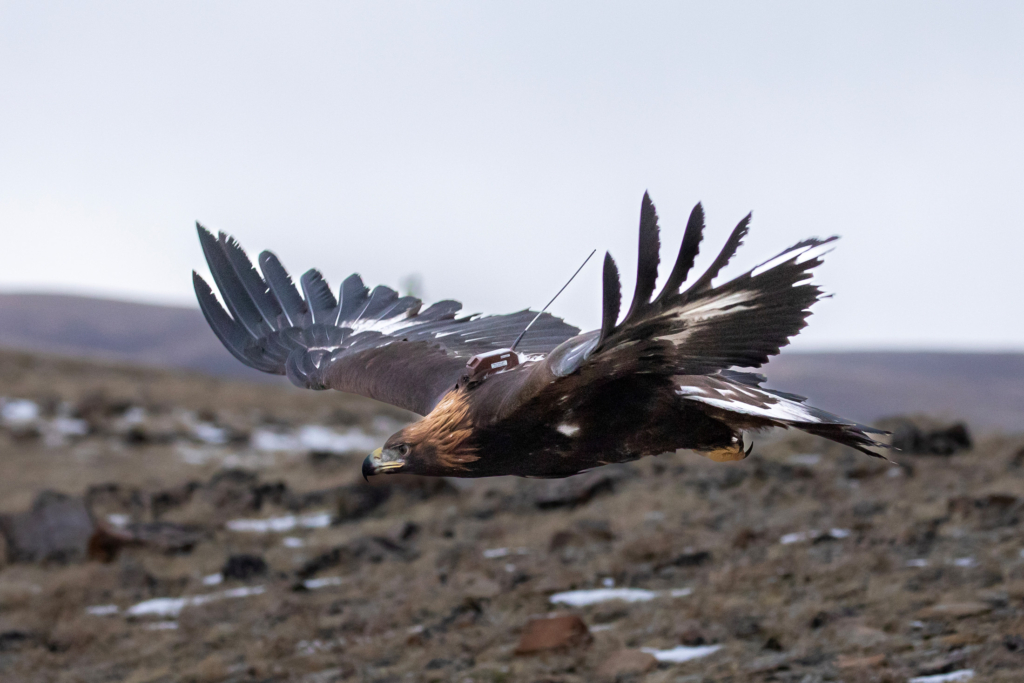
Domenech, with the help of Bryan Bedrosian and Step Wilson from Teton Raptor Center, banded and fitted the eagles with GPS telemetry to track movement, location, altitude and temperature.
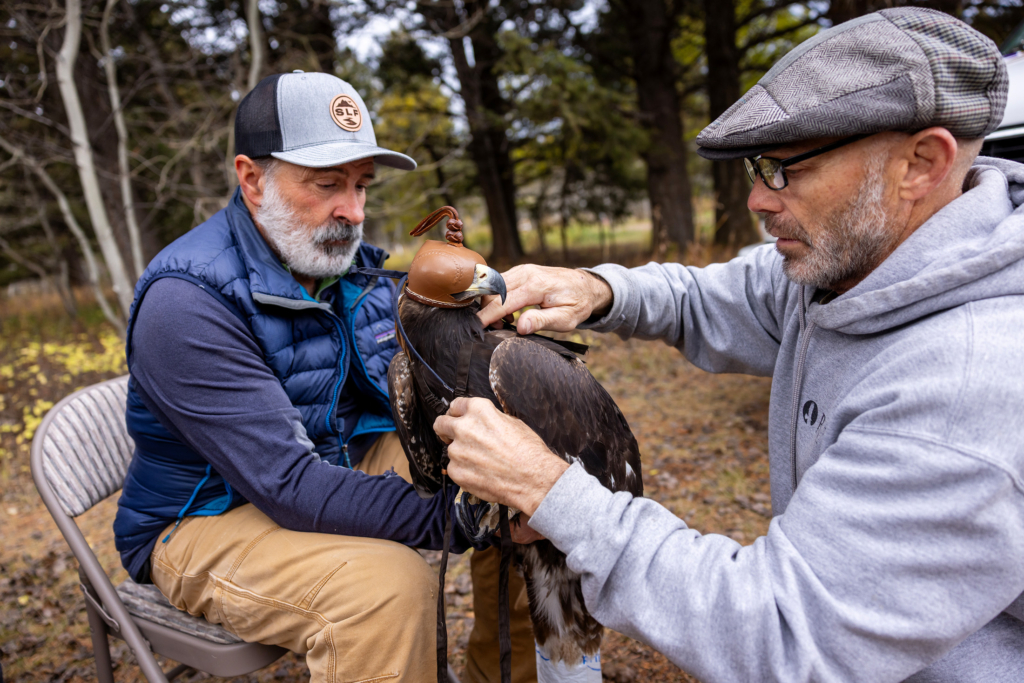
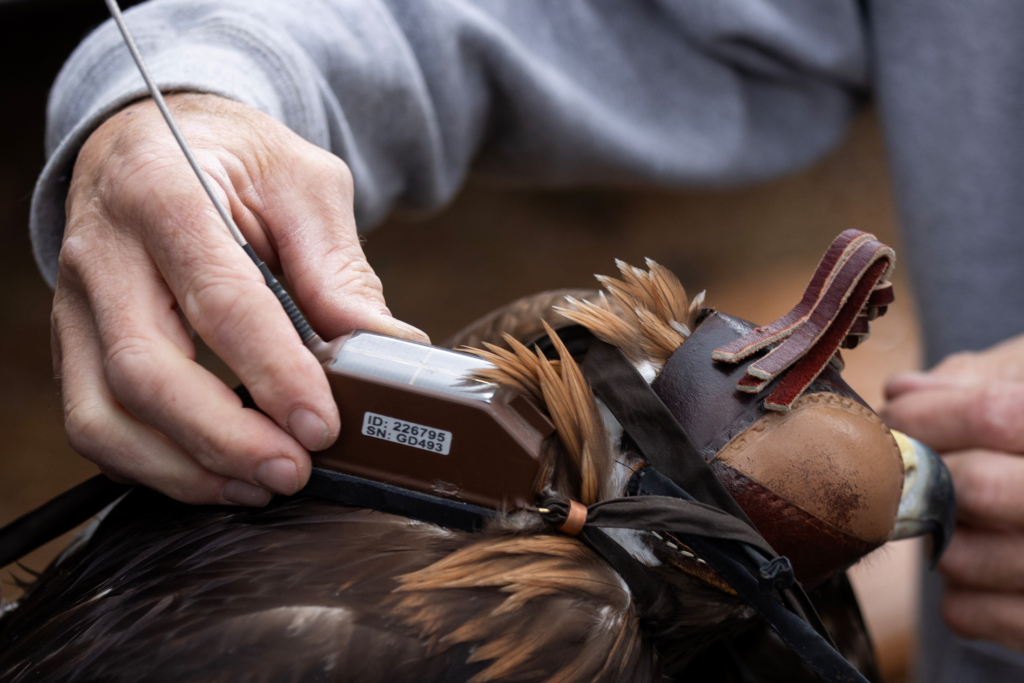
On Sunday, Oct. 19, the team traveled to the release site, a mountaintop near White Sulphur Springs, Montana. They set the kennels on the mountainside as Kelli Mosteller, “Eagle Auntie” and executive director of the First Americans Museum, joined Randell and Dunham in naming the eagles to the four directions.
“We wanted to be intentional with the naming ceremony. We said their names and blew the eagle whistle to the Creator in all four directions. We also left a prayer bundle with one of their mom’s feathers and one of their dad’s feathers tied to it,” Dunham said.
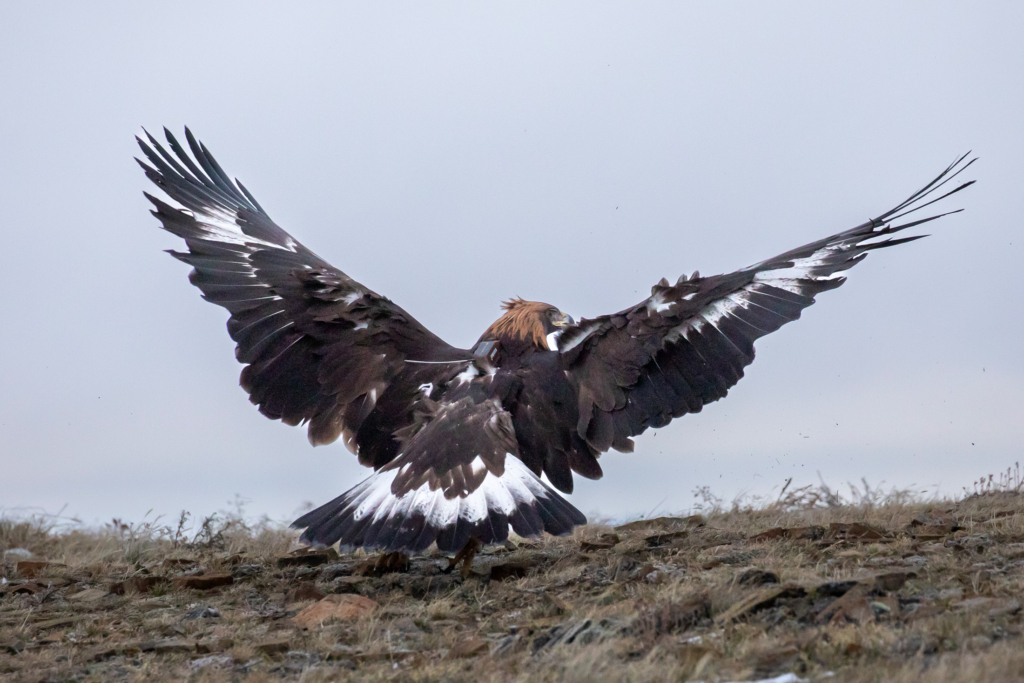
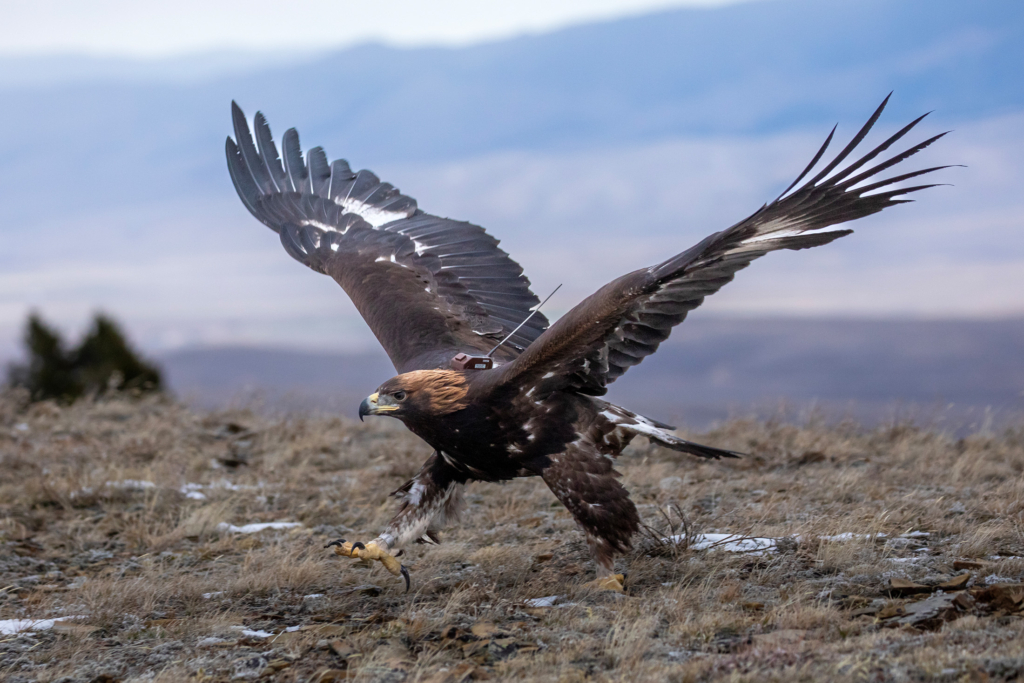
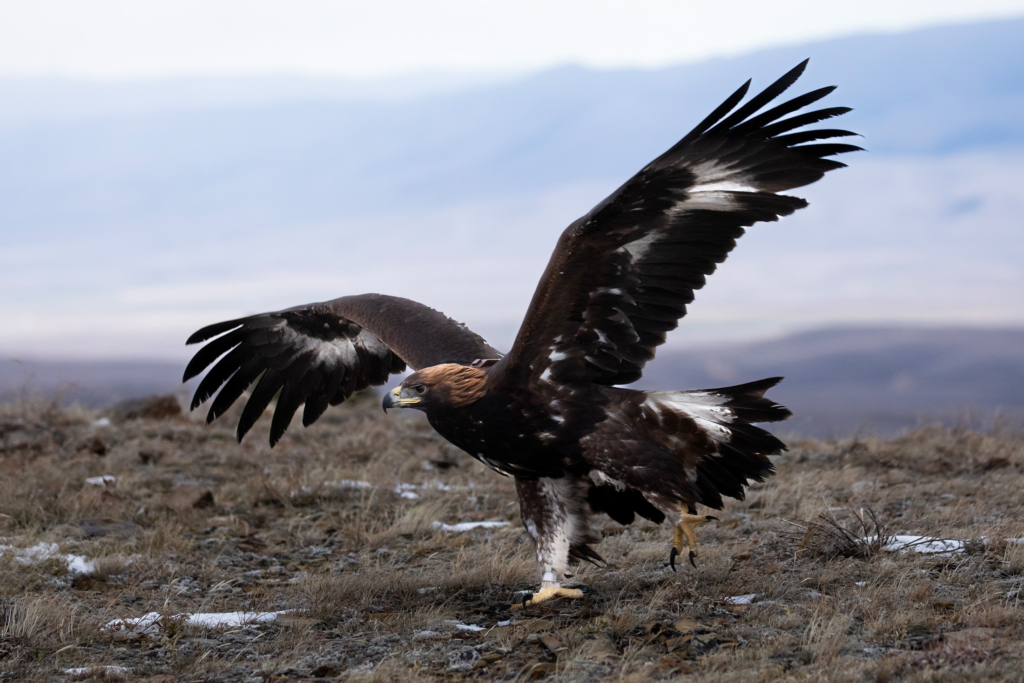
Randell and Dunham opened the kennel doors at the same time. After a moment of hesitation, Nëmkis exited his kennel and flew with the wind. Mnotagwzékwé followed, exiting her kennel and flying up to the mountaintop. She paused to take in the sights around her before lifting one wing, then the other, and flying against the wind.
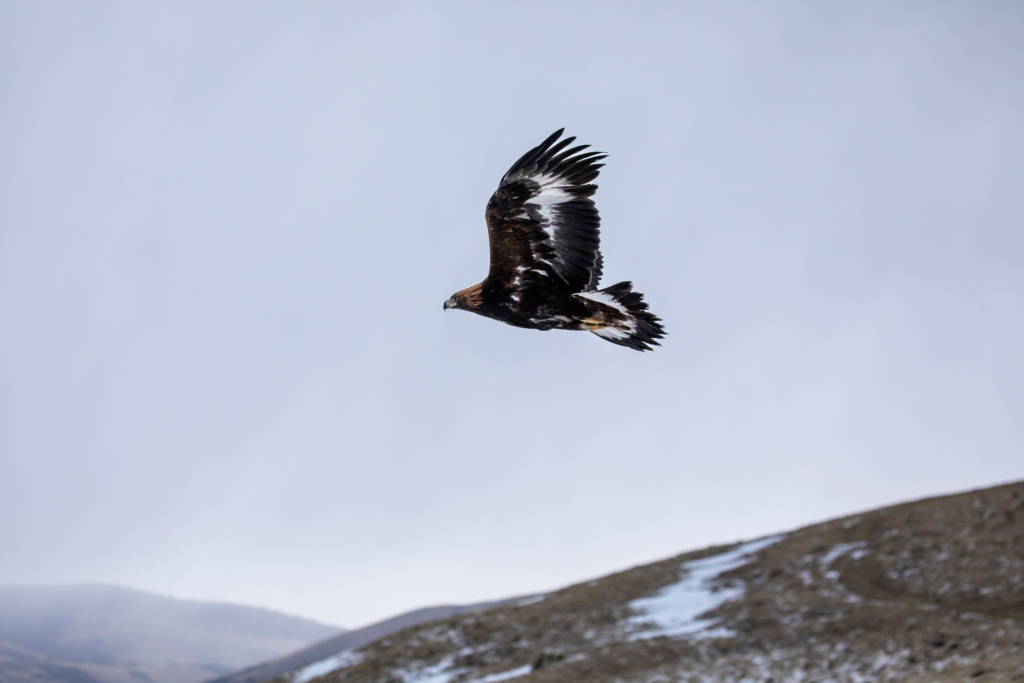
The team watched silently as the wind carried the golden eagles over the valleys.
“Once they came out of the kennels, they knew what to do and it was amazing seeing them soar over the valleys,” Mosteller told the Hownikan. “I was honored to go get the mom and dad of these two from being injured in the wild and it was an honor to take their children back to the wild and be a part of naming them.”
Culture and the future
Eagles are sacred to Potawatomi people because they fly so high that they carry messages and prayers to the Creator.
Randell emphasized the responsibility and importance of releasing eagles.
“They are our messengers, and we thanked them as we released them because they will be taking care of us now,” Randell told the Hownikan. “One day of freedom is better than a lifetime of captivity.”
“The golden eagle population is declining drastically. If we can offset that trend or contribute to growing the golden eagle population, it is our responsibility to do that.” Dunham continued, “But thinking of seven generations, what if seven generations from now, there were no golden eagles? Standing on that mountain the day of the release and absorbing all that, I feel it is important to do what we can by releasing these golden eagles.”
Since their release, the eagles have traveled separately throughout Montana and parts of Wyoming. Telemetry reports show they are thriving.
“They are following the migratory paths of golden eagles. These eagles are doing great and beating the odds,” Domenech said.
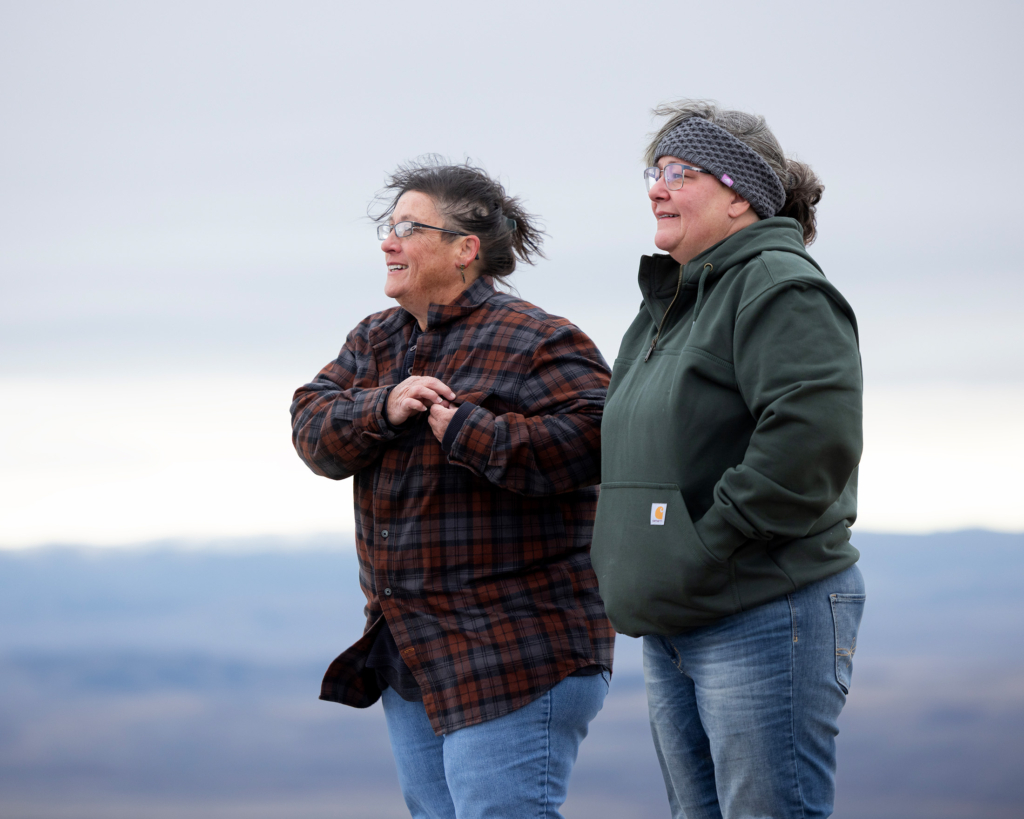
The aviary managers hope to release more eagles in the future and are excited to see the parents of the two released eagles already singing and carrying nesting material.
Heartfelt thanks
Randell and Dunham expressed heartfelt thanks to everyone who played a part in this sacred event.
They are thankful for Tribal leadership’s support, the continued partnership with U.S. Fish and Wildlife Services, Montana Fish, Wildlife and Parks, Rob Domenech of Raptor View Research, Teton Raptor Center, WildCare Oklahoma and a community of individuals that supported them through this process.
“This isn’t just us doing this; it’s our community and Tribal resources,” Randell said. “These eagles have been prayed for and there have been sweats and fasts for them. We couldn’t do it without our Tribal leaders and cultural teachers. We will forever be grateful.”