
By Justin Neely, CPN Language Department Director
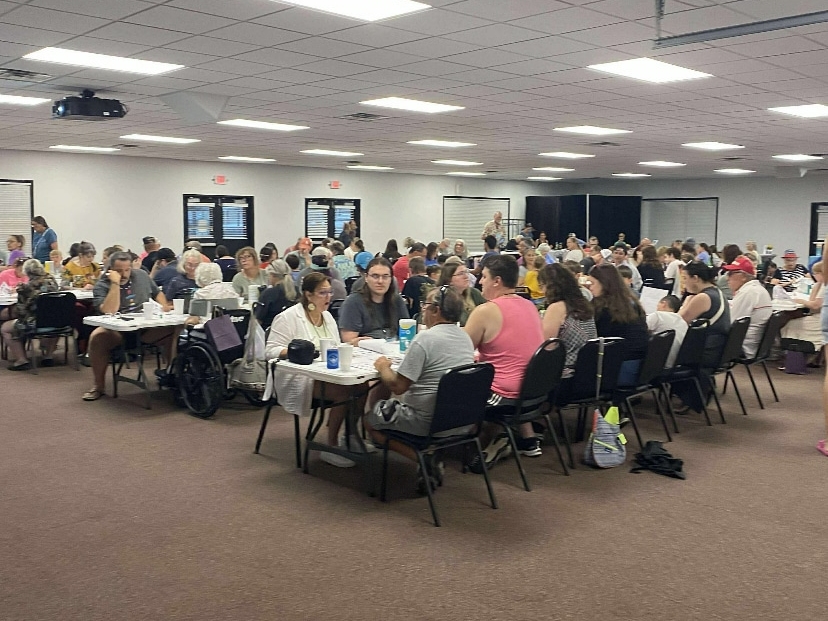
We are wrapping up one of our busiest times of the year. We had 250 people play bingo with us at Festival, which was an awesome turnout! We also had a good number play dice and bowl on Saturday and for our adult and kids classes. We got a chance to talk about our various tools we have for learning the language: learning.potawatomi.org, also education.transparent.com/bodwewadmimwen for our 7,000 languages course, and our online dictionary at potawatomidictionary.com.
As I write this, we are in the last week of our eight-week master apprentice summer language course. This allows folks to work on the language for eight hours a day, 40 hours a week. By the end, they will have around 320 hours working on the language. The time commitment is big, but we have had several folks join us for two to four weeks and several more for the entire eight weeks. We have had both kids and adults join us. This is the final year of our Endangered Language Fund grant. We plan on continuing next year with a restructured version. Instead of eight weeks, which is challenging for folks to be away from home, we will have a two- to three-week beginner track and a two- to three-week intermediate/advanced track.
Ngom ngi-bakwanabokemen (Today we made sumac drink). The original Native lemonade was from staghorn sumac. We have a variation of that down here in Oklahoma (not to be confused with poison sumac). The berries get bright red when ready, and the dust on the berries is used for making the drink. Long ago, settlers made this drink because lemons and limes were expensive and rare. We learn a little something different about this each time we prepare it. First, don’t wash the dust off the berries — that’s what makes it sweet. Soak them in hot water for 24-48 hours. The longer you soak them, the stronger the drink. You can also add maple syrup to sweeten it. Don’t harvest berries after rain. Try to wait at least three days after a rain before you harvest. Some also say to dry the berries before soaking.
We also made sugar cakes. The sugar that is made from maple syrup is quite delightful. It never really occurred to me until a couple of years ago that you could cook this down on your stove. You just take 100% maple syrup and bring it to a boil, then keep whisking it until it starts to harden. If you want to put it into little molds, make sure you do that before it hardens in your dish. It hardens pretty quickly after it’s removed from heat.
Right after we wrap up, we have about two weeks to prepare for the annual Potawatomi Gathering/Language Conference. I have had the honor of presenting for the last 23 years. This year, both of my coworkers in the language department will also be presenting.
Then it will be time to get ready for upcoming high school classes. Last year, Shawnee, North Rock Creek and Tecumseh high schools participated in our online, self-paced course. In the near future, we hope to announce a new, eight to 10-week beginner course starting in the fall.
Our summer immersion students have shown such strong dedication to learning the language that we are going to continue having an all-day immersion class every Friday into the foreseeable future. In the fall, Shelly will also be starting a new, in-person beginner series for those who prefer in-person instruction.