Cyanotypes, a way of capturing images without a camera by using light-sensitive iron salts, date back to when the process was discovered in 1842. Today, Peltier family member Rebecca Barnard uses the process to connect with nature and to create some of her art.
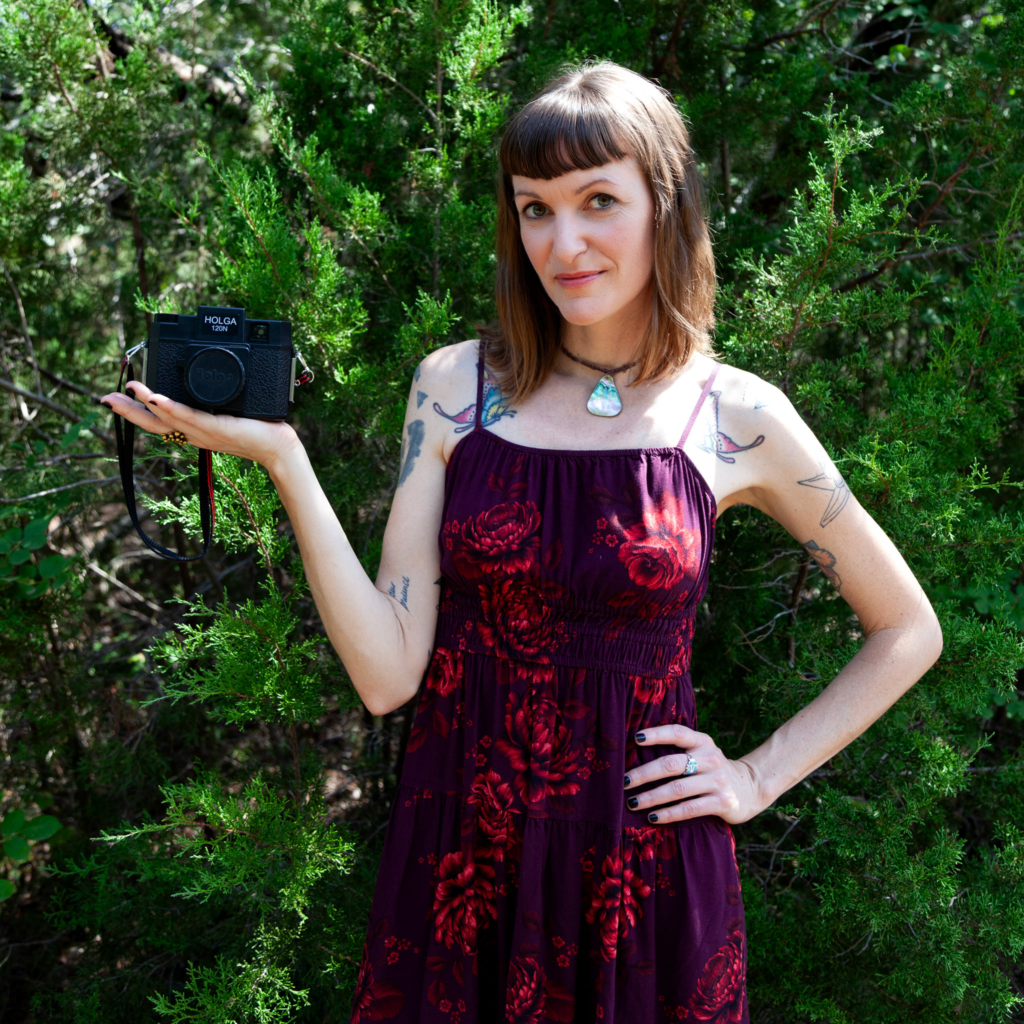
“It started out being used artistically and scientifically: to make prints from camera-produced negatives, and to record botanical specimens at scale,” Barnard said.
Later, she explained that cyanotypes became used mostly for reprography of technical drawings (and where the term “blueprints” comes from). However, she said the method remains a simple way to create images and one that is accessible without the use of expensive equipment.
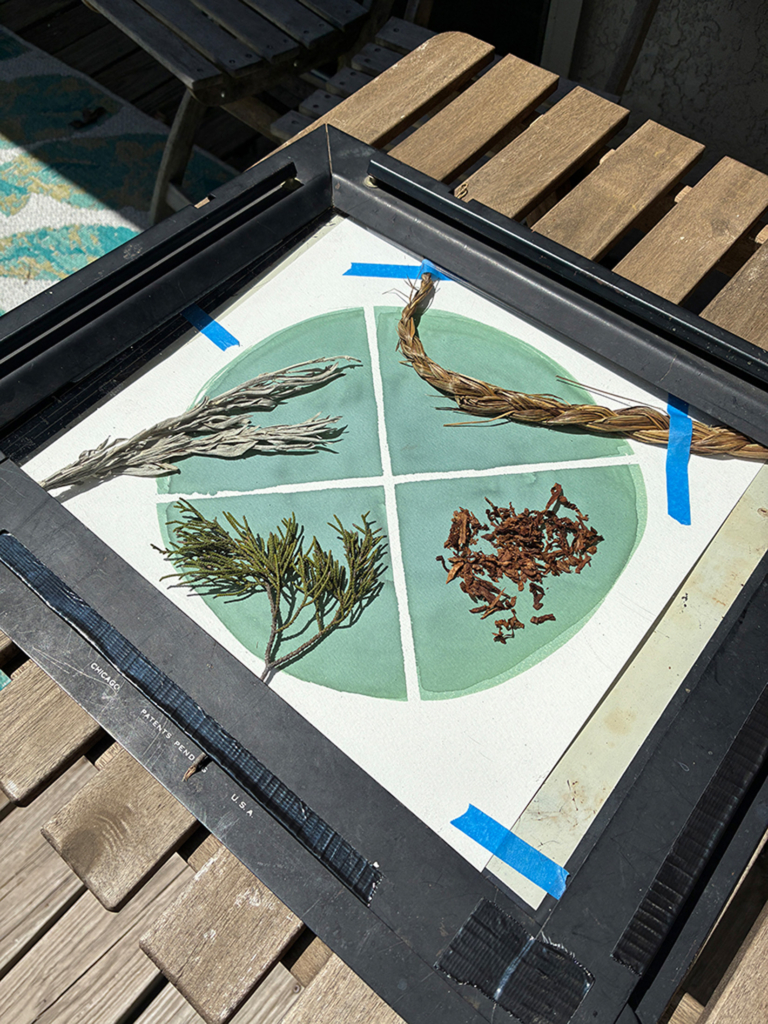
“You mix together two chemical solutions (potassium ferricyanide and ferric ammonium oxalate) to produce a photosensitive liquid, which is then applied to any porous surface and allowed to dry,” Barnard explained. “Then objects or a film negative are placed on the material’s surface and exposed to ultraviolet light (typically sunlight) for a few minutes. Finally, the image is developed by washing the material with water.”
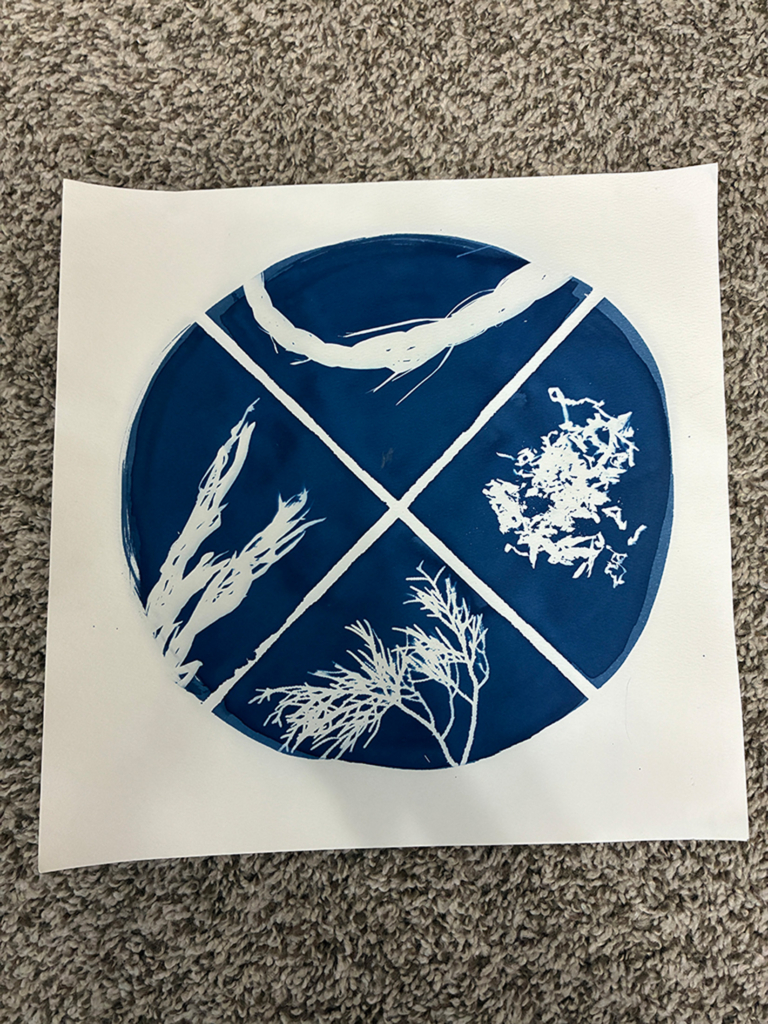
When the process is complete, the water-insoluble Prussian blue pigment remains in the paper and turns any parts that were exposed to the UV light into shades of blue.
Barnard said she was exposed to many types of artistic media through her artist mother, Donna Barnard, but she developed an interest in photography while in her teens.
While studying darkroom photography during her time at community college, she found she was intrigued by how hands-on the process was. She later transferred to the University of Texas at Arlington to major in photography, and there she took an Alternative Processes class.
“I learned several antiquated processes: cyanotype, Van Dyke Brown, lumen printing, and wet plate collodion tintype,” Barnard said. “I love how un-instant this type of photography is; you really have to slow down and follow your intuitions.”
In her own art, Barnard enjoys capturing shapes and patterns found in nature with items such as feathers, leaves and flowers, and using this process to feel more connected to the earth and to nature.
“I love that with cyanotype, you not only have the subject to consider, but also the presentation; you can apply the chemistry to many materials, and in a myriad of techniques. Your application of the chemistry can be delicate and sparse or wild and bold,” she said. “Cyanotype is a combination of the infallibility of a photograph but with the whimsy of art.”
Aside from her work with cyanotypes, Barnard has a freelance business called Vision Arts where she said graphic design and sign making are her “bread and butter.”
She also sells some of her work on Etsy at visionartstx.etsy.com and occasionally shows her work in galleries.
Barnard lives in Dallas with her two cats, and she regularly visits her family in Oklahoma City and in Colorado.