Navarre family member Kay Kkendasot Mattena accepted the role as program associate for the Association on American Indian Affairs, the longest-serving national Native non-profit, in 2025.
In her role, she will support programs such as Cultural Sovereignty, Next Generations, and Become an Ally, as well as conduct research on repatriation and protecting sacred places, work with Native Nations to support tribal museums and protect cultural heritage, and to support efforts toward intergenerational healing.
“Kay has been working with the Association as a contractor and has displayed a true heart-centered commitment to supporting the Association’s cultural sovereignty initiatives and relationship building across Turtle Island. The Association is excited to have Kay’s creative problem solving, kindhearted communication and dedication to supporting sovereignty efforts across Native Country,” said Shannon O’Loughlin, citizen of the Choctaw Nation and the Association on American Indian Affairs CEO and attorney.
Mattena received her bachelor’s degree in archeology from Mercyhurst University and her Master of Arts degree from the University of Massachusetts, Amherst.
“Throughout my time in higher-education I have had Native advisors, which was really formative for me to be taught and mentored by Native scholars who are the cornerstones of Indigenous archaeologies ,” she said, making mentions of Dr. Edward Jollie and Dr. Sonya Atalay, whom she worked with on her master’s and her Ph.D. work. “I had some really formative education in archeology, specifically, that pushed me to work in collaborative ways with my own community, as well as our kin.”
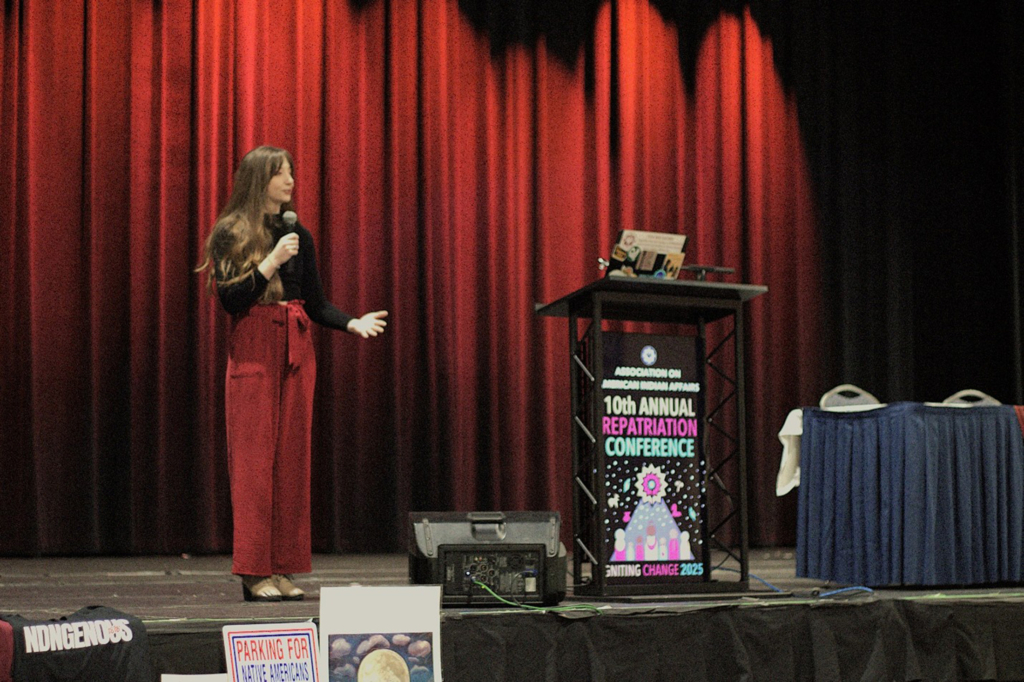
Mattena started with the association as a contractor in January 2024, doing work such as monitoring auctions for stolen cultural heritage. O’Loughlin then worked with Mattena to co-develop the position that she holds now.
“It came by total surprise, and it also came at a time when I was feeling really disillusioned with academia,” Mattena said.
While in her third year of her Ph.D. and working on a project with the Potawatomi Nation Tattoo Society, Mattena found it was becoming difficult to do her research wéwéne (in a good way) through the constraints of academia, both because of an inability to properly credit elders and knowledge keepers as co-authors and because of funding issues.
“Now that I’m not working through the university, I can still do my research,” she added. “Not only that, but my coworkers and the association are excited about it, and they support me in continuing that research.”
She said being able to work at the association has been “life changing.”
“I’m mentored by and work with a group of Native women who have decades of experience in their fields, and I get to be in an environment where I’m learning something new every day, and I get to do work that I can see has actual, tangible impact,” she said. “I know that I can speak from my heart and speak loud and be proud of who I am because I work for the association.”
Mattena said the role feels like a good fit for her, especially with her background in archeology.
Among the many things she does in her position, Mattena said one aspect that is exciting to her is seeing private collectors reach out to the association to return ancestors and belongings.
“It’s been really healing and empowering to see, not just our Native Nations come together in a good way, but also to see our allies find an organization like us, or even reach out to specific Nations directly to return things that they never should have had in the first place,” she said. “These are just individuals who, you know, maybe grandpa passed away and while they’re dealing with his estate, they found ancestors’ belongings, sacred items, or even just art that they want to return to their affiliated Nations and homelands. There’s several who have offered to pay for everything from shipping to travel costs, which just warms my heart.”
There are long days, and the work is busy, she said, with new things happening every day.
“There’s something new all the time that we have to respond to. Good and bad, right?” she said. “I feel like I’m doing busy work that’s good and actually having a good impact.”
Going forward, Mattena said she hopes to learn how to be a good leader from the matriarchs she works with at the association, whom she called “giants” — women like Cultural Sovereignty Director June Lorenzo, Laguna Pueblo and Navajo (Diné), and Next Generations Director Kim Mettler, a citizen of the Mandan, Hidatsa and Arikara Nation.
“I have some amazing aunties and elders that I get to work with every day, and I really just want to spend time with them to learn from their decades of knowledge so I can be able to build my own skillset with the hopes that I can be a good ancestor to the next generation,” Mattena said.
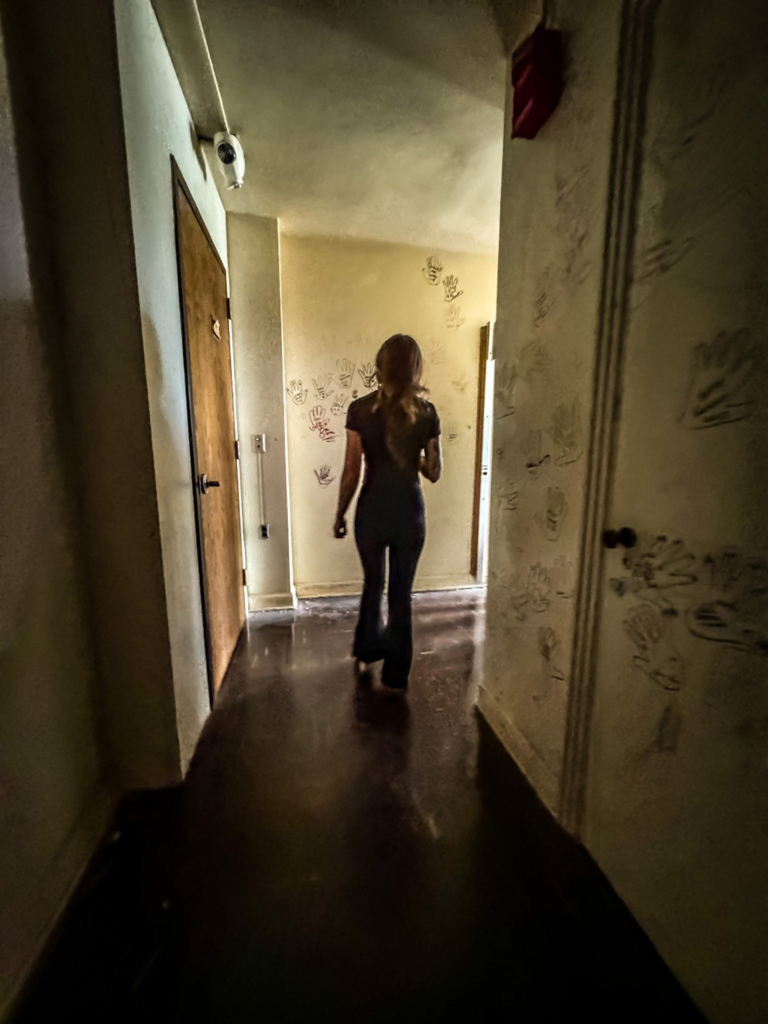
“I never had the chance to ask my nokomis-ben (grandmother who has walked on) for the advice I would need as a an adult, the stories about my ancestors, or why she worked so hard to hide who she was. My kche-mishomis-ben (my great-grandfather who has walked on) survived an orphanage and boarding school in Kansas and all I know from his time there, at St. Josephs Boarding School, was that he only ever showed anger at my mom when she asked about it. Being able to work alongside these warrior matriarchs heals those broken ties every day I have the chance to do so. They are teaching me what it means to be a matriarch and a warrior for our people in ways that my nokomis-ben only dreamed about,” she added.
She also hopes to see more people get involved with the Tribal Partners Working Group, a closed group for Native Nations by Native Nations that focuses on discussing and sharing knowledge about cultural sovereignty and heritage. Representatives from within Native Nations are able to collaborate on things such as repatriation, museum and collection care, and more.
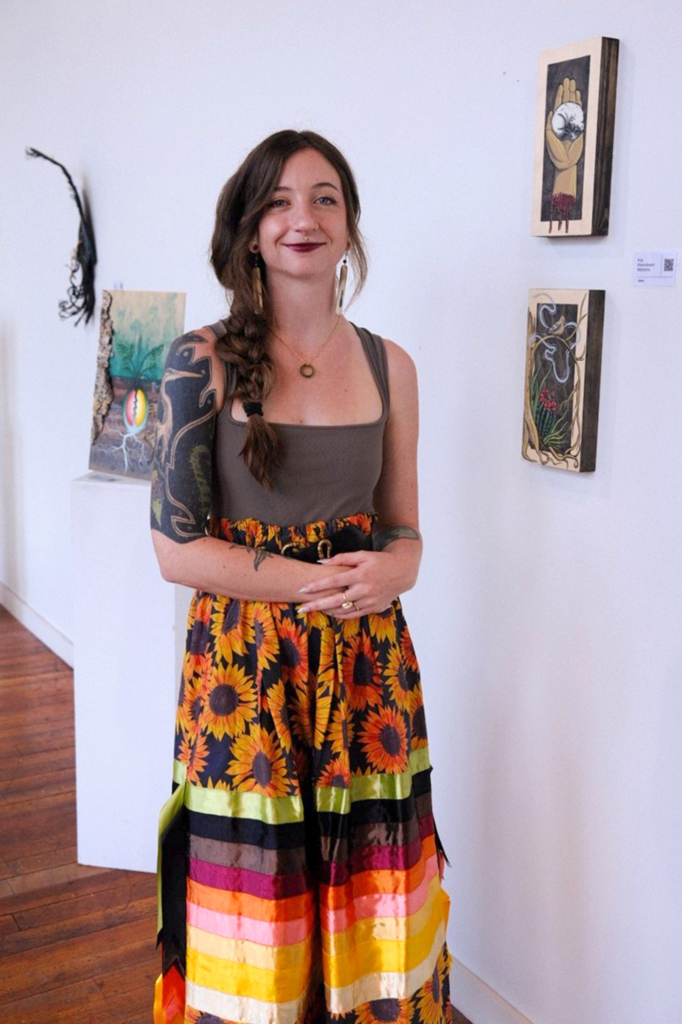
In addition to her work with the association, Mattena is also an artist who recently had her work featured in the main gallery of a Native-run art gallery, 50 Arrow Gallery in Easthampton, Massachusetts. View her artwork at cpn.news/mattenaart.
For more information about the Association on American Indian Affairs, visit indian-affairs.org.