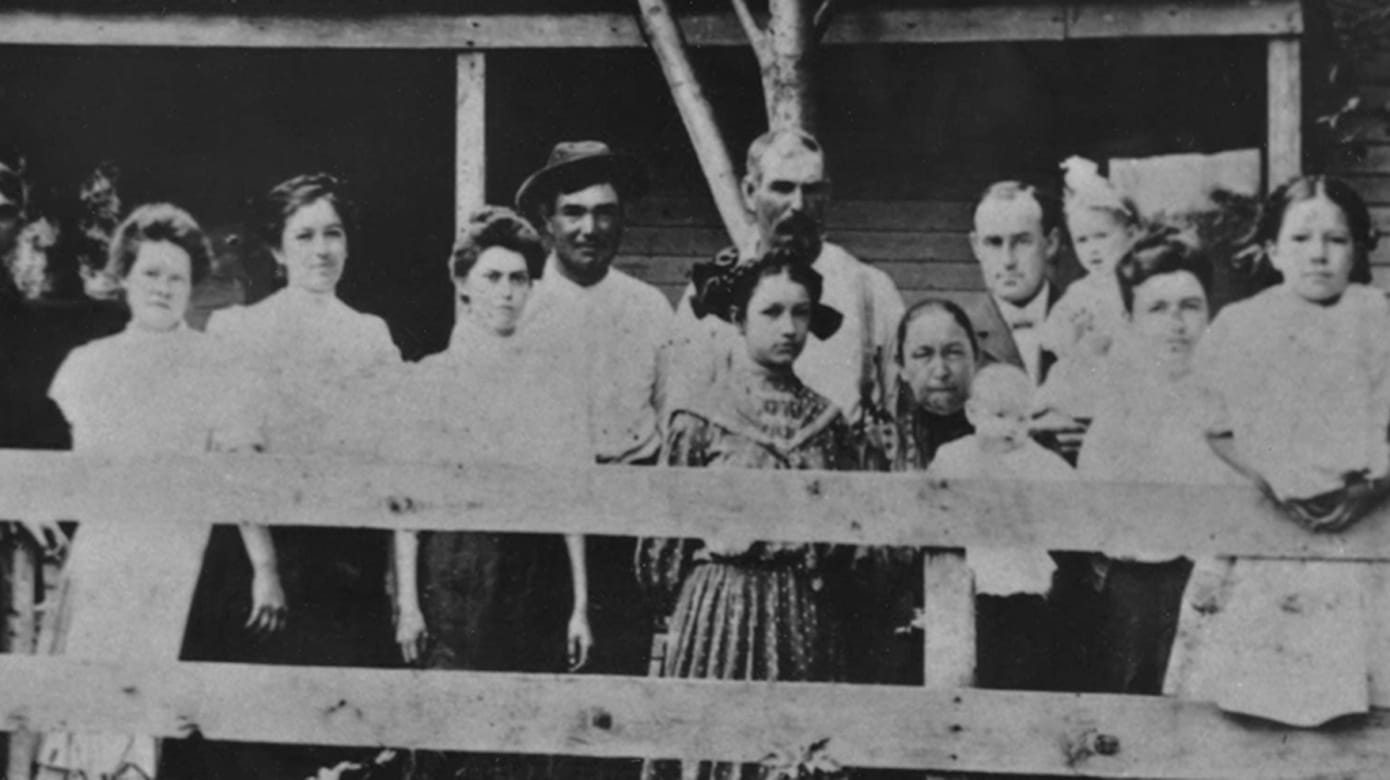
The Citizen Potawatomi Nation’s Cultural Heritage Center provides resources to keep the Tribe’s history safe and accessible for generations to come. One key way the Nation does this is through the CHC’s archives and video interviews. To highlight some of the archive’s holdings, the Hownikan is featuring photographs and family history of every founding Citizen Potawatomi family. If interested in assisting preservation efforts by providing copies of Citizen Potawatomi family photographs, documents and more, and to schedule family interviews, please contact the CHC at 405-878-5830.
Roots in Indiana
The roots of the Navarre family reach back to an 1834 wedding in Pokagon’s village in Indiana. Kis-naw-kwe, a daughter of Potawatomi chief Wabaunsee (Break of Day), married French fur trader Pierre Navarre. Pierre had moved to Indiana in 1820 from Monroe, Michigan.
Wabaunsee, born Nakses (Shining Sun), had earned a reputation as a powerful and influential leader among the Potawatomi, Odawa and Ojibwe of Illinois and Indiana. He was opposed to American expansion but recognized the need to maintain peace for the protection of his people. Wabaunsee later became a respected spiritual leader in the Midewiwin, the Grand Medicine Society.
Potawatomi leader Bourassa wrote of Wabaunsee, “These qualities made him a first-rate diplomatist in treaty making. There never were sufficient barriers in his way to thwart him from executing any projects he might have in view.”
With his people in mind, Wabaunsee made many visits to Washington, D.C. to discuss potential treaties. As he was returning to Iowa in 1845, his stagecoach crashed. He suffered serious injuries that ultimately caused his death.
Kis-naw-kwe was baptized and took the name Angelique. Pierre had worked with the American Fur Company. Later, he established his own trading post, and his marriage to Kis-naw-kwe and alliance with the Potawatomi contributed to his business success.
The couple had: Peter, Marianne, Judith, twins Anthony and Joseph, Monica, John, Catherine, Isador, Theresa, and Frances.
In 1838, caving to pressure from settlers eyeing the Potawatomi’s ancestral lands, the federal government began to forcibly remove the Potawatomi west. Pierre joined his family and the rest of the Tribe during one of the removals, eventually winding up in Kansas. He stayed in Kansas until Angelique walked on, then returned to the Great Lakes region around 1850. Pierre sent the younger children to live with relatives in Michigan. Older sons Anthony and Peter later attended Choctaw Academy, an Indian school in Kentucky.
Seeking stability, generations thrive
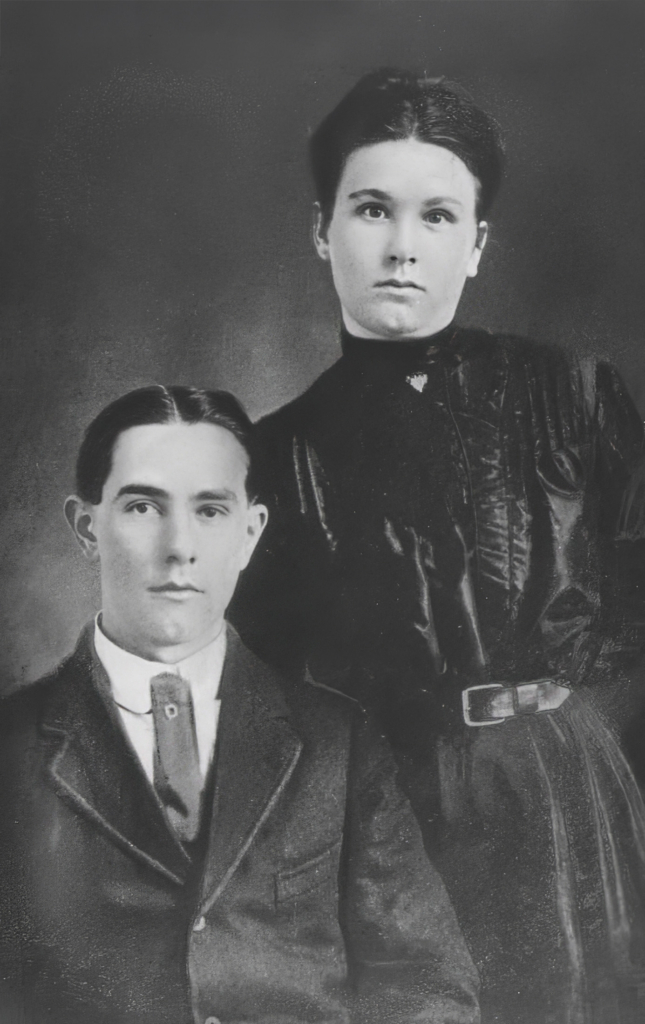
Frances married John DeGraff and lived in Monroe, Michigan. The couple had Mary Frances, John, Ellen, Joseph, William, Edward, Isidore and George. Pierre Navarre walked on in 1864 while staying with Frances. Two years later, Frances and her family moved to Kansas.
Anthony first married Sow-na-we-qua and later married Annie May. His children were Joseph, Catherine, Isidore, John M. and Theresa. Anthony was a schoolteacher at South Bend, Indiana, and later became an advocate for Tribal interests in Washington, D.C. He lobbied for an amendatory treaty in 1866, which granted quarter sections of land to all adult Potawatomi, regardless of gender. This was a significant step forward for women, who now had the same property ownership rights as men.
Rossville, Kansas, would later be built on land that had belonged to Anthony Navarre.
Theresa married Claude Milot. The Milot children were Alexander, Emily (Holloway), Mary Ann (Vieux), Joseph, William and Louise (Weddel).
Judith married Clement Bourdon. Their children were Mary, Adelaide, Catherine, Peter, Anthony, Alexandrine and Margarita.
Peter married Ellen Page. The couple had Peter, Jerome, Frank, Louis, Gregory, Francis and Julia.
Marianne married Edward Maines. In some records, the name appears as Maynes. The other Navarre siblings either never married, or information on their marriages did not appear in available records.
Differing viewpoints
During the 1860s, the Potawatomi were faced with a significant decision. Under pressure from settlers and railroad companies, the U.S. government offered citizenship and individual allotments to the Potawatomi in Kansas in order to obtain the land.
The group that accepted U.S. citizenship and individual allotments in Indian Territory became known as the Citizen Band. The group that preferred to live communally in Kansas became known as the Prairie Band. Some members of the Navarre family continued to live in Kansas while others made the move to Indian Territory.
Gregory Navarre and his wife, Mary, were the parents of Henry, Jerome, Mary, Emily, William, Robert Jr., Peter Jr., Edith, Maggie, Alice and Joseph. Sadly, only Jerome, Peter Jr., Edith, Maggie, Alice and Joseph lived to adulthood.
Gregory was postmaster at Rossville from 1867 to 1871. Gregory’s son, Pete Navarre, was the first graduate of the printing shop in 1901 from Haskell Indian Nations University, Lawrence, Kansas. Pete owned and published the Rossville Reporter for 40 years. A building built in 1972 at Haskell was named Navarre Hall in honor of Pete.
Louis and his wife, Julia, had Mamie, Fay, Viola, Lena, Mary, Robert and Edward (Edwin).
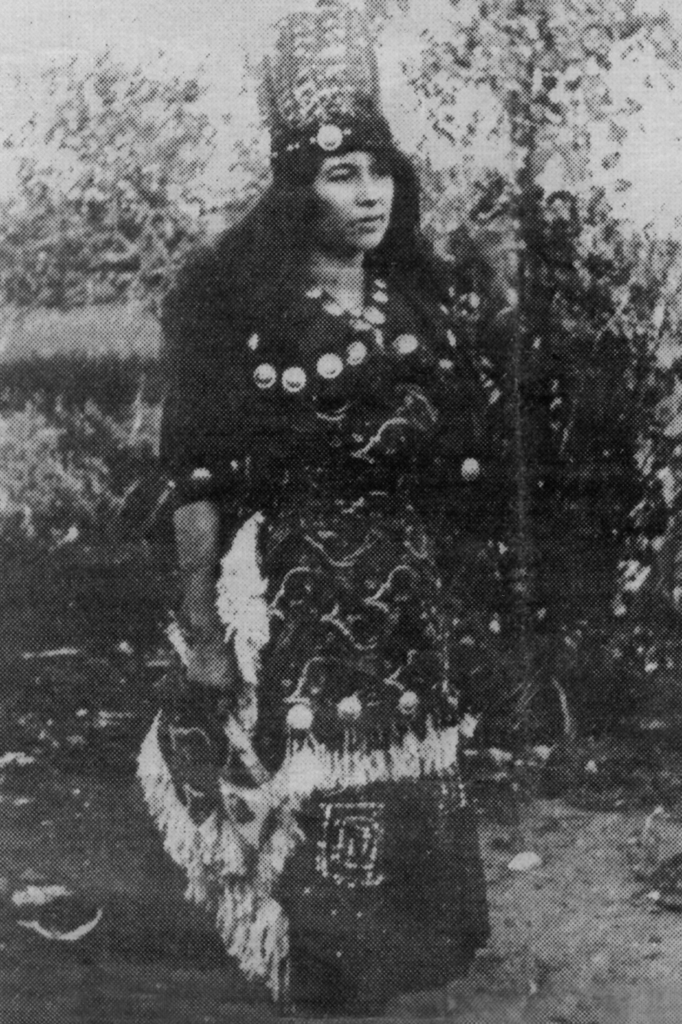
Harrah, Oklahoma, was established thanks to Louis Navarre. The land for the original site of Harrah was donated by Louis, who was first to arrive at his allotment in the 1870s. While a plaque outside the city’s history museum mentions Navarre’s contributions, the town was later named in 1898 for Frank Harrah. However, Navarre Street is prominently located near the center of town.
Edward (Edwin) had two children named Emery and Jessie. Jessie would later become the mother of future CPN Vice-Chairman Linda Capps. Capps has been a CPN elected official since 1987. In June of 1990, she was elected vice-chairman of the Nation, a position she still holds today. A career educator, she has always emphasized the importance of education. Drawing inspiration from her ancestors, Capps works for the betterment of her community, volunteering her time on numerous local boards and leadership organizations.
If interested in assisting preservation efforts by providing copies of Citizen Potawatomi family photographs, documents and more, and to schedule family interviews, please contact the CHC at 405-878-5830. Schedule interviews online at portal.potawatomi.org. Learn more about the Family Reunion Festival at cpn.news/festival, and find research resources online at potawatomiheritage.com.