A Citizen Potawatomi Nation tribal member from Hope, Maine, posthumously received a medal for his heroic actions that saved the lives of two family members.
Henry Norman Brooks, a Greemore family member, walked on after saving the lives of his two daughters on July 8, 2023, in Union, Maine. Brooks was 45.
Henry and his son were by the St. George River when his daughters slipped on algae-covered rocks and fell into the river. Brooks and his son quickly jumped into action. As his son retrieved his younger sister, Brooks grabbed his other daughter. Henry managed to get his daughter close to the shore before he was overcome by the fast-moving current. Brooks’ son was able to return both girls to the shore. Tragically, Henry Brooks did not survive.
For his actions, Henry Brooks received the Carnegie Medal for Heroism from the Carnegie Hero Fund Commission (carnegiehero.org). The commission awards the medal to individuals from throughout the United States and Canada who risk themselves to an extraordinary degree saving or attempting to save the lives of others.
The Carnegie Medal is considered North America’s highest civilian honor for heroism. It has been awarded to 10,476 heroes since 1904. The award was established by the industrialist-philanthropist Andrew Carnegie.
Holding precious memories
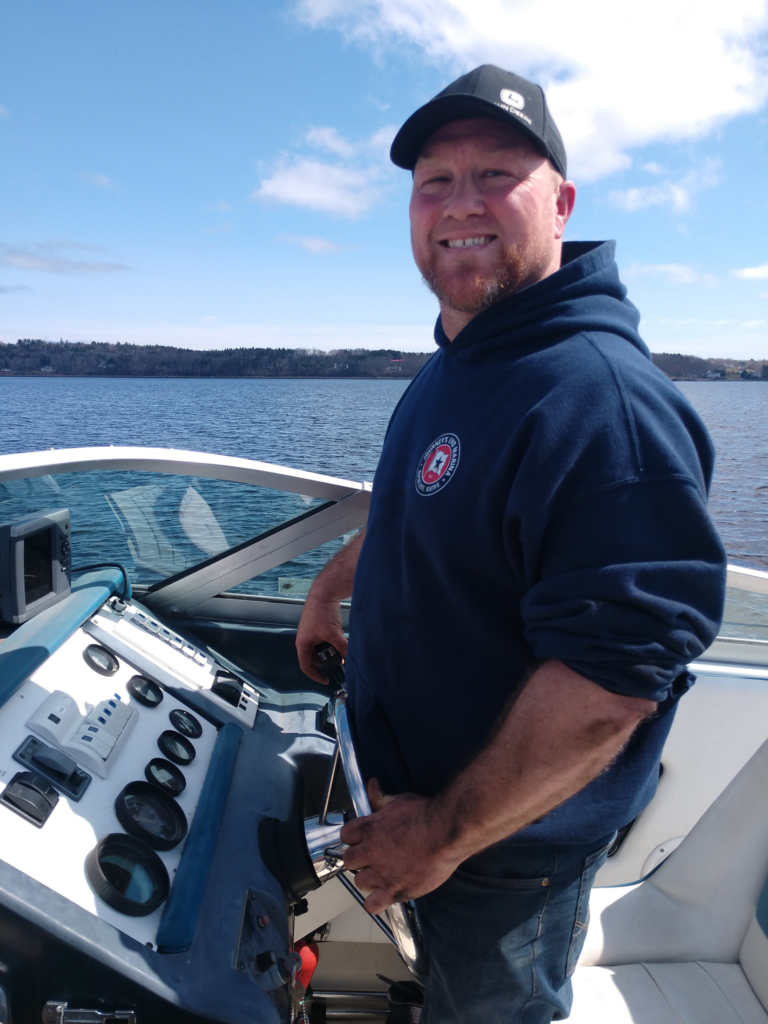
Henry was survived by a son, two daughters, and wife, Danielle. The family has many treasured recollections of a man who was known for his loving, giving spirit and big heart.
Among Danielle’s happy memories of her husband was visiting CPN headquarters when their children were young, she said. They were most excited to explore the Cultural Heritage Center.
“We were driving across the country and we made sure to make time, but we only had the day to go. Our son was older, but the girls were really young when we went. Other than the pictures, they don’t really remember too much. So, we’re going to try and do it now that they’re a little older,” Danielle said.
Henry and Danielle grew up in California. They had known each other most of their lives, first meeting as teens. The couple eventually had three children, a son, now 28, and two daughters, now 15 and 14.
“I knew (Henry) since he was 12. I kind of watched him grow up,” Danielle said. “He was a good father. He was very committed as a father, and he worked really hard.”
The family moved to Maine in 2015, seeking a quiet place to raise a family. Henry was always mechanically inclined and would eventually make his living as a climate technology field mechanic.
“He was always very good with mechanical stuff. He pursued welding and mechanical, marine diesel and was a heavy equipment mechanic. He did that at a very early age,” Danielle said.
Henry worked for a tugboat company and later for a company that maintained several large machines used in road work. He even worked in the oil field, flying from Maine to Texas, spending one week in the field and one week at home in Maine.
His most recent position was with Emerson, a climate technology company.
“He was a commissioning engineer. So, he’d start up new power plants for alternative energy. His main contract was in Pennsylvania where they take all of the trash from New York and they process it and turn it into natural gas. That was his job before he passed,” she said.
Henry always had a unique connection to the machines that he worked on, Danielle said.
“That was something he was very good at. He kind of listened to them, could understand them. It was very unique, I have to say. He could hear a car go by and say, ‘Oh, that has a problem there,’” she said.
Henry valued time in nature, including camping, fishing and boating. Maine was a perfect fit for the father and outdoors enthusiast.
“He grew up loving the water. He was always on boats and a big fisherman. He and his brother would go out on big fishing trips together. They’d catch sharks and all the crazy stuff,” Danielle said. “He was also really into motorcycles.”
Henry respected and appreciated the environment as well.
“When we came (to Maine), he wanted to create a big farmstead. We found some property where we raised animals and planted. That was kind of our thing to try and reconnect,” she said. “Maine is very forested, so he was drawn to it.”
A treasured family history
Henry’s grandmother was Evelyn Hart. Hart grew up in Oklahoma, on Potawatomi land. Like many Potawatomi families, Hart’s family eventually made their way to California to seek new opportunities. Hart embraced her leadership abilities, Danielle said.
“She was the former mayor of Newport Beach, California. She was also woman of the year,” she said.
Henry’s mother and grandmother were a big influence on him growing up, Danielle said, teaching him about his Tribal history.
After the family became established in Maine, Henry’s mother eventually joined them there.
Actions fit his character
Danielle was not at all surprised by Henry’s heroic actions. They showed exactly the type of man and father he had become, she said.
“He was fully dressed so he didn’t have time to take his shoes off. My son, luckily, was able to grab a life jacket or I probably could have lost all of them,” she said.
She doesn’t believe Henry would have considered himself heroic but just doing what needed to be done.
“He always told the children that he would protect them from anything, no matter what the threat was. He reminded them that no matter whether it was a bear or a bad guy or any kind of imminent threat, he would gladly sacrifice himself,” she said. “As far as my husband and my son, they didn’t even give it a second thought.”
Enthusiastic about Tribal learning
Henry Brooks was enormously proud of his Potawatomi heritage, Danielle said. He encouraged his family to learn as much as they could about their culture.
Danielle said the family stays connected today through the Tribe’s YouTube page and social media.
“We enjoy doing the Word of the Day and those kinds of things. We like the Potawatomi dictionary, and we have many books,” she said.
She has even encouraged her children’s teachers to share the Potawatomi books with their classes so their classmates could be exposed to the Brooks children’s culture.
“When the children were growing up, he wanted to make sure they had some connection. He said he wished he had more connection growing up because his aunt and his grandma did. He wanted to instill that with the girls, our son, to have pride in that and to have that as part of their identity,” Danielle said.
Henry felt strongly about his Potawatomi heritage because of his children.
“He thought that that was important for them growing up, opposed to when they’re older and then try to make up for the lack of connections,” she said. “That’s why I’m trying to continue that for him. I’m trying to make sure that they still hold onto and still have it in their lives because that was important to him to reinforce that for the children.”
Danielle hopes people who think of Henry will remember his caring nature and respect for others, of all his many positive attributes.
“He was just a really, really genuine person who loved the idea of justice and inclusivity. He was a really big guy, and he had tattoos but he was just the biggest loving teddy bear. He’d give everybody a hug,” she said. “He just really felt that people need to be able to feel comfortable in their authentic self, and to feel accepted and to be accepted. It’s hard to sum up someone in a small bit, but I think he thrived on happiness around him. He always wanted to put a smile on people’s face, and he was just a really good person.”
“That’s exactly how he lived his life. And he had friends of all races and ages and social classes, and he treated everybody the same. He felt that everybody should have the confidence and the support to feel good about themselves,” she said.
To learn more about the Carnegie Hero Fund Commission, visit carnegiehero.org.