The Citizen Potawatomi Nation’s Cultural Heritage Center provides resources to keep the Tribe’s history safe and accessible for generations to come. One key way the Nation does this is through the CHC’s archives and video interviews. To highlight some of the archive’s holdings, the Hownikan is featuring photographs and family history of every founding Citizen Potawatomi family. If interested in assisting preservation efforts by providing copies of Citizen Potawatomi family photographs, documents and more, and to schedule family interviews, please contact the CHC at 405-878-5830.
Beginnings
The Burnett family has a long, rich history with the Potawatomi people. Kaukima, daughter of Potawatomi Chief Nanaquiba (Water Moccasin) and sister to Potawatomi Chief Topinabee (He Who Sits Quietly), married French fur trader William Burnett.
Kaukima and William had seven children: James, Abraham, John, Isaac, Jacob, Nancy and Rebecca.
In 1826, Abraham received three sections of land near Logansport, Indiana, and a community 13 miles west of it bears his name — Burnettsville.
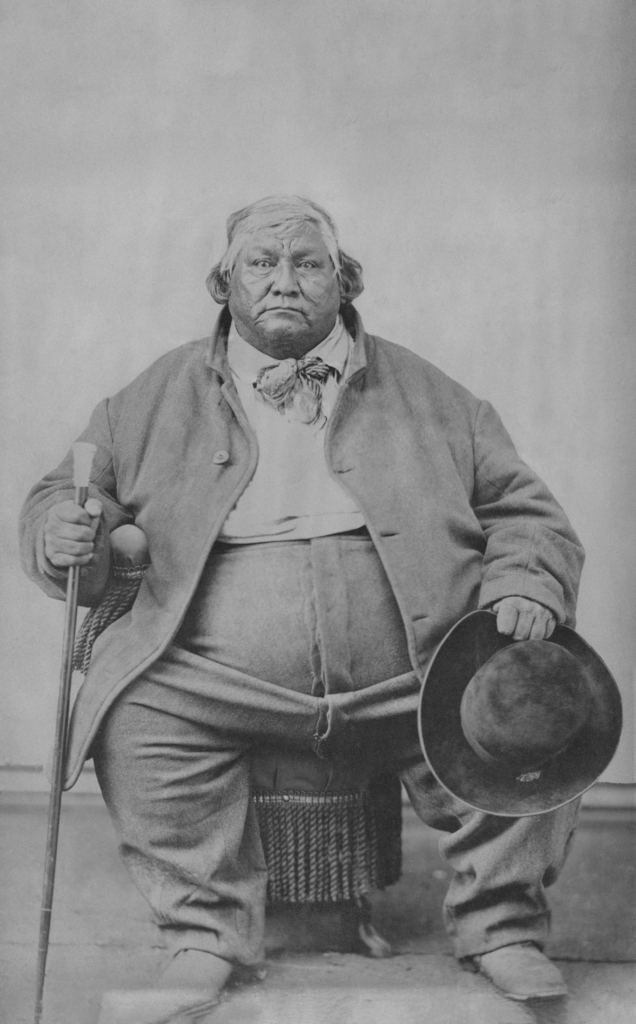
Although Abraham never married, he would later adopt a younger cousin. Nanweshmah (He Prays With Plants) was born in Indiana near the Tippecanoe River in November 1812 to Chief Shauquebe and his wife, Conezoquah. Abraham Burnett was a cousin of Conezoquah. After Conezoquah and Chief Shauquebe passed away, Abraham Burnett adopted Nanweshmah.
Nanweshmah took his adopted father’s name and became known as Abram Burnett.
Leadership
Following in his adopted father’s footsteps, Abram studied at the Carey Mission in Fort Wayne, Indiana, and the Choctaw Academy in Kentucky. The skills Abram obtained while in school proved important in the trying years to come, and he worked as an interpreter for church and governmental purposes.
Burnett married a wealthy Potawatomi woman named D’mooshkeekeeawh. English artist George Winter captured sketches of Potawatomi and kept written records on his experiences. He wrote, “She was an Indian woman of much personal attraction. She excited the admiration of white men as well as that of the Indians. … Abram Burnett appeared always proud.”
As more and more settlers wanted land in the Great Lakes region, Potawatomi and other Native American tribes lost most of their ancestral homelands. In 1830, President Andrew Jackson signed the Indian Removal Act, granting the government authority to remove tribes west of the Mississippi.
Federal officials called a meeting with the Potawatomi in the fall of 1838, supposedly to get the Tribe and its leaders together. Instead, volunteer militia detained as many Potawatomi as possible, including Burnett. On Sept. 4, 1838, the Potawatomi began their forced removal, walking 660 miles from present-day Indiana to present-day Kansas known as the Trail of Death. More than 40 Tribal members perished on the journey, mostly women and children.
Because of Chief Burnett’s background, he also served an interpreter on the Trail of Death, helping lend a voice to his people. Jesuit priest Benjamin Petit joined the Potawatomi on the removal and fell ill once arriving on the new reservation. Burnett took it upon himself to take Petit to the nearest Jesuit seminary in St. Louis to receive care. Fr. Petit was too weak to make the complete journey on horseback. Although he hoped to recover in St. Louis and return to Indiana, Petit passed away Feb. 10, 1839.
Post removal
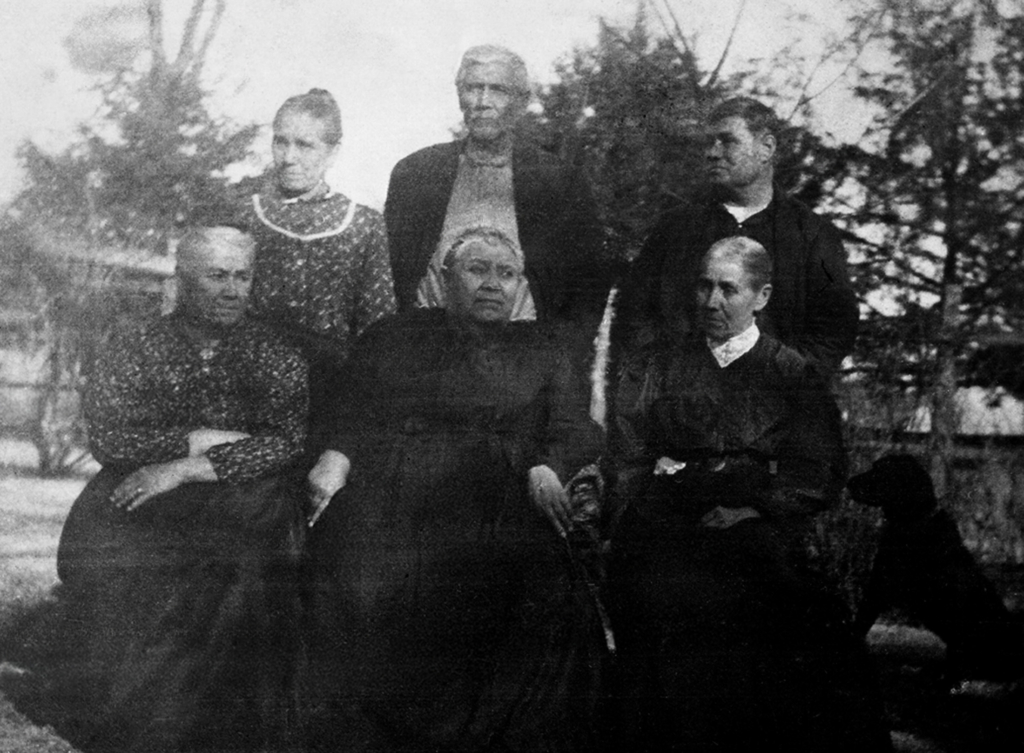
Adapting to the new lands in present-day Kansas proved difficult. The lack of provisions promised by the federal government hindered the Potawatomi tribe’s ability to successfully settle on the new reservation. Many more perished, including Burnett’s wife D’mooshkeekeeawh in 1842.
Burnett represented the Potawatomi in Washington, D.C., on numerous occasions, and on one trip, he met his second wife Mary Knofflock. They wed in 1843 and had six children: Joseph W., Mary J., Mary A., Catherine, Clara and Abraham Lincoln.
As Eastern woodland people, the prairie lacked many of the resources familiar to the Potawatomi. However, Burnett and others established successful businesses and took advantage of the Oregon Trail that cut through the Potawatomi Reservation. In 1848, he settled on what remains the highest elevation in Topeka, Kansas, and became a successful farmer and sold livestock.
According to Joseph Murphy’s book Potawatomi of the West: Origins of the Citizen Band, Abram came to considerable prominence in Kansas. During this time, the community had several factions of Potawatomi with varying views. He supported efforts to create a community-approved business committee. This ideal continues today with Tribal-member elected legislators and executive body members. While in Kansas, he also wrote and spoke on behalf of the Tribe, and Burnett’s signature appears on the Treaty of 1846, Treaty of 1861 and Treaty of 1867.
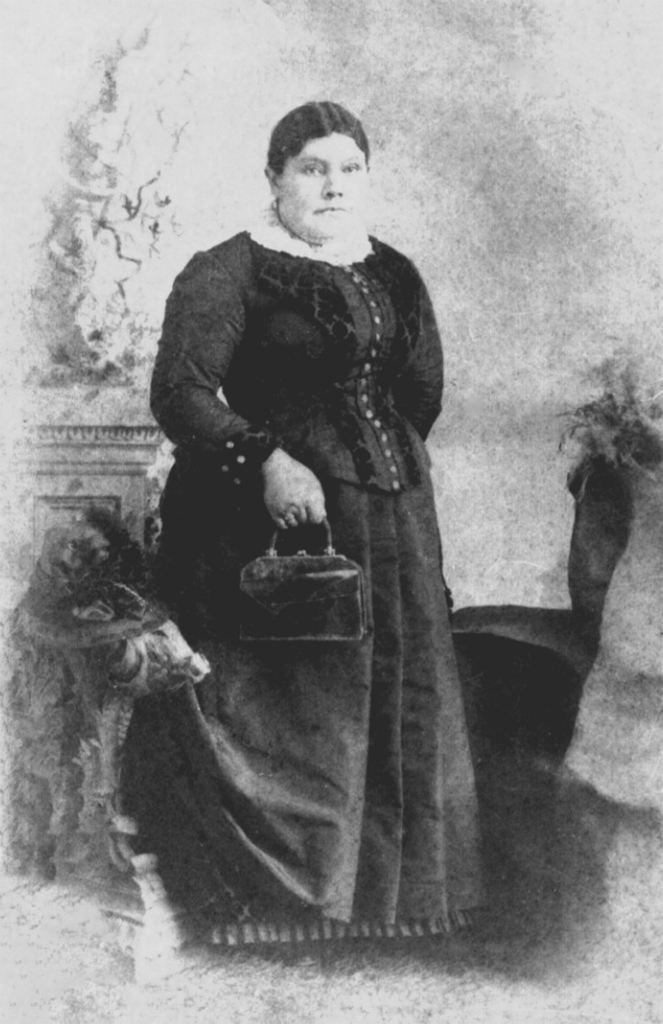
Burnett passed in 1870. Afterward, Mary and the children relocated to present-day Oklahoma where the Burnett children carried on the family legacy of leadership and entrepreneurship.
Today, the site in southwest Topeka, Kansas, known as Burnett’s Mound is marked by a tall, marble monument. CPN and the Shawnee (Kansas) County Parks and Recreation Department partnered to create three informational panels at the site to educate visitors about Burnett’s leadership. Burnett’s final resting place is on land west of Topeka’s Skyline Park and his descendants have worked together to improve and maintain the site.
If interested in assisting preservation efforts by providing copies of Citizen Potawatomi family photographs, documents and more, and to schedule family interviews, please contact the CHC at 405-878-5830. Schedule interviews online at portal.potawatomi.org. Learn more about the Family Reunion Festival at cpn.news/festival, and find research resources online at potawatomiheritage.com.